Repairing electronic products is becoming increasingly complex as manufacturers introduce more product variants and increasingly sophisticated electronics. Each device may require a different repair procedure depending on its configuration, the detected fault and the replacement components required.
To help manufacturers standardise repair quality while reducing technician dependency, TNO partnered with Ansomat to develop a digital repair solution that automatically loads the correct repair workflow for every product variant. By combining digital work instructions, AR guidance, machine vision and process verification, the system ensures technicians always follow the correct repair procedure while maintaining complete process traceability.
TNO, the Netherlands Organisation for Applied Scientific Research, is a leading independent research institute that bridges the gap between science and industry by translating advanced research into practical, scalable solutions, with a strong focus on Industry 5.0 technologies such as smart manufacturing, digitalisation, AI-driven production systems and connected factories, helping companies and governments accelerate innovation, improve competitiveness and bring validated, future-ready technologies to market.
Modern repair environments often operate in a high-mix, low-volume setting where technicians work on hundreds of different product variants.
Although products may appear identical, repair procedures frequently differ depending on:
Traditional paper instructions or static digital manuals struggle to support these highly dynamic workflows. Technicians must interpret documentation, identify the correct procedure and manually verify that every repair step has been completed.
This increases:
TNO wanted to investigate a "No Fault Forward" repair strategy that could automatically adapt work instructions to every product variant while verifying critical repair steps throughout the process.
Variant-Specific Repair Instructions Powered by AR & Verification
Together, TNO and Ansomat created a repair workflow that automatically loads the correct instructions for each device and guides the technician through fault-dependent steps—while verifying completion along the way.
Variant-aware, skill-based guidance for any technician.
The repair process is organised across multiple workstations covering disassembly, inspection, repair, reassembly and end-of-line validation while ensuring process consistency from start to finish.
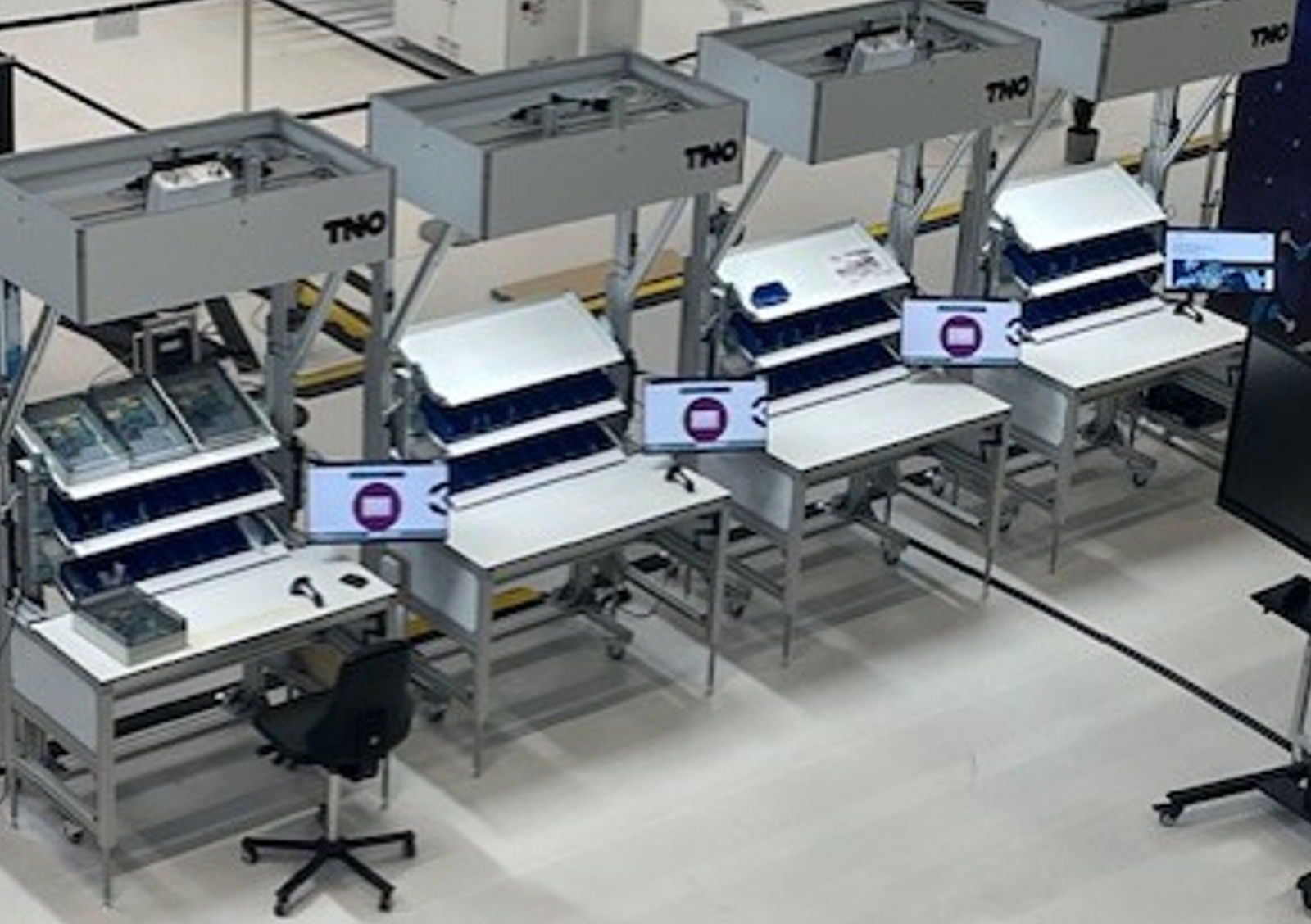
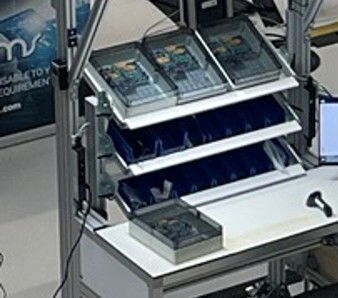
Scan Barcode to Load the Right Variant and Workflow
A barcode scan identifies the correct device variant and immediately triggers the appropriate repair flow.
Analyse the Pack and Display Corrective Actions
The system supports diagnosis by identifying issues and showing the relevant corrective actions for that specific fault.
Projector-Guided Picking from the Correct Bin
Technicians are guided visually to select the right items from the correct bin using projector-based instructions—reducing mix-ups and wasted time.
Vision Confirmation of Completed Actions
A vision system confirms key steps have been completed, reducing the risk of skipped actions.
Cross-Station Data Checks to Catch Incomplete Work
Repair data is carried forward from previous stations to detect unfinished or incorrectly completed steps before the pack moves on.
Label Printing for End-to-End Tracking
A correct, traceable label is printed with identifying information so each repaired pack can be tracked through the process.
| Step | Technology | How it works | Validation |
| Identify product | Barcode Scanning | The product barcode identifies the exact variant and automatically loads the appropriate repair workflow. | Correct repair sequence selected automatically. |
| Diagnose fault | Digital Work Instructions | Fault-specific repair actions are displayed based on the diagnosis. | Only relevant repair procedures are shown. |
| Guide component selection | AR Projection Guidance | Projector guidance highlights the correct bins for replacement components. | Prevents incorrect part selection. |
| Verify repair | Machine Vision | Cameras automatically verify critical repair actions and assembly steps. | Missing or incorrect actions are detected immediately. |
| Validate process | Cross-Station Verification | Process data follows the product through every workstation, ensuring all previous steps have been completed successfully. | Prevents incomplete repairs from progressing. |
| Release product | Traceability & Labelling | A unique repair label is generated with complete repair history. | Full repair traceability recorded automatically. |
| Traditional Repair | Ansomat Digital Repair Guidance |
| Paper repair manuals | Variant-specific digital instructions |
| Technician chooses procedure | Workflow loaded automatically |
| Manual part selection | AR-guided picking |
| Manual inspections | Machine vision verification |
| Independent workstations | Cross-station process validation |
| Paper repair records | Complete digital traceability |
| High training requirements | Guided repair for any technician |
The digital repair solution enabled TNO to simplify complex repair workflows while improving repair consistency across different product variants.
Digital guidance reduced the learning curve by presenting technicians with only the instructions relevant to the product being repaired.
Variant-specific workflows ensured every repair followed the correct procedure regardless of technician experience.
Machine vision and cross-station verification detected missing or incorrect repair actions before products progressed to the next workstation.
Every repair followed the same validated workflow, reducing process variation across operators and shifts.
Every repair action, inspection result and workstation validation was automatically recorded, supporting quality assurance and continuous improvement.
As electronic products become more configurable, repair operations become increasingly difficult to standardise.
Digital repair guidance removes the burden of interpreting documentation by automatically selecting the correct workflow for every product. Combined with AR guidance, machine vision and process verification, manufacturers can improve repair quality, reduce technician dependency and build complete traceability into every repair operation.
See how Ansomat’s AR-guided, verification-based workflows can transform complex repair operations.