


In modern manufacturing, companies are surrounded by data, from machines, ERP systems, and MES platforms. Yet one of the most critical areas remains underutilized: the shop floor itself.
With the rise of digital work instructions and connected worker platforms, manufacturers can now capture operator-level data and turn it into real, measurable continuous improvement.
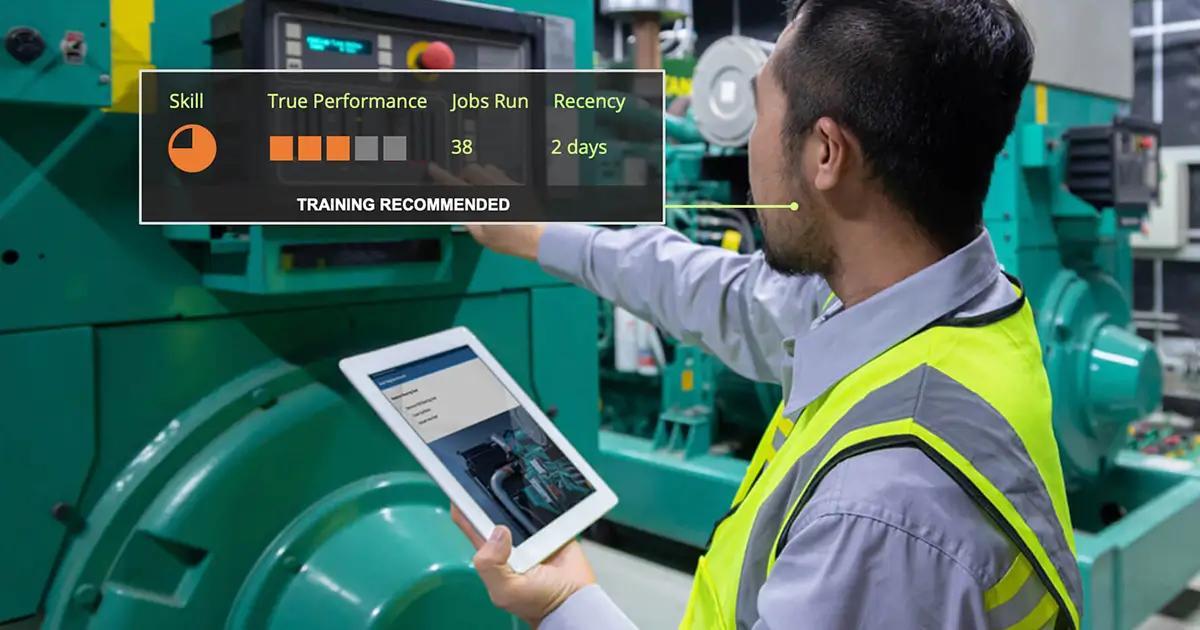
Shop floor data refers to all information generated during actual production execution, especially at the operator level.
Most factories already collect:
But there’s a critical blind spot:
👉 What operators actually do during execution
This includes:
Without this, improvement efforts rely on assumptions, not facts.
In Industry 5.0, manufacturing evolves into a truly human-centric model, where operators are no longer just part of the process—they are central to it. This shift emphasizes collaboration between humans and technology, rather than full automation.
As explained in Ansomat’s article on What is Industry 5.0: Six Different Technologies Explained, technologies like digital work instructions and real-time operator guidance are key enablers of this transformation.
A modern manufacturing data collection software or connected worker platform transforms operator actions into structured, usable data, enabling smarter and faster decision-making across the shop floor.

Track every step:
👉 Creates full execution traceability
Automatically capture:
👉 Eliminates paper and improves accuracy
Capture images via:
Benefits:
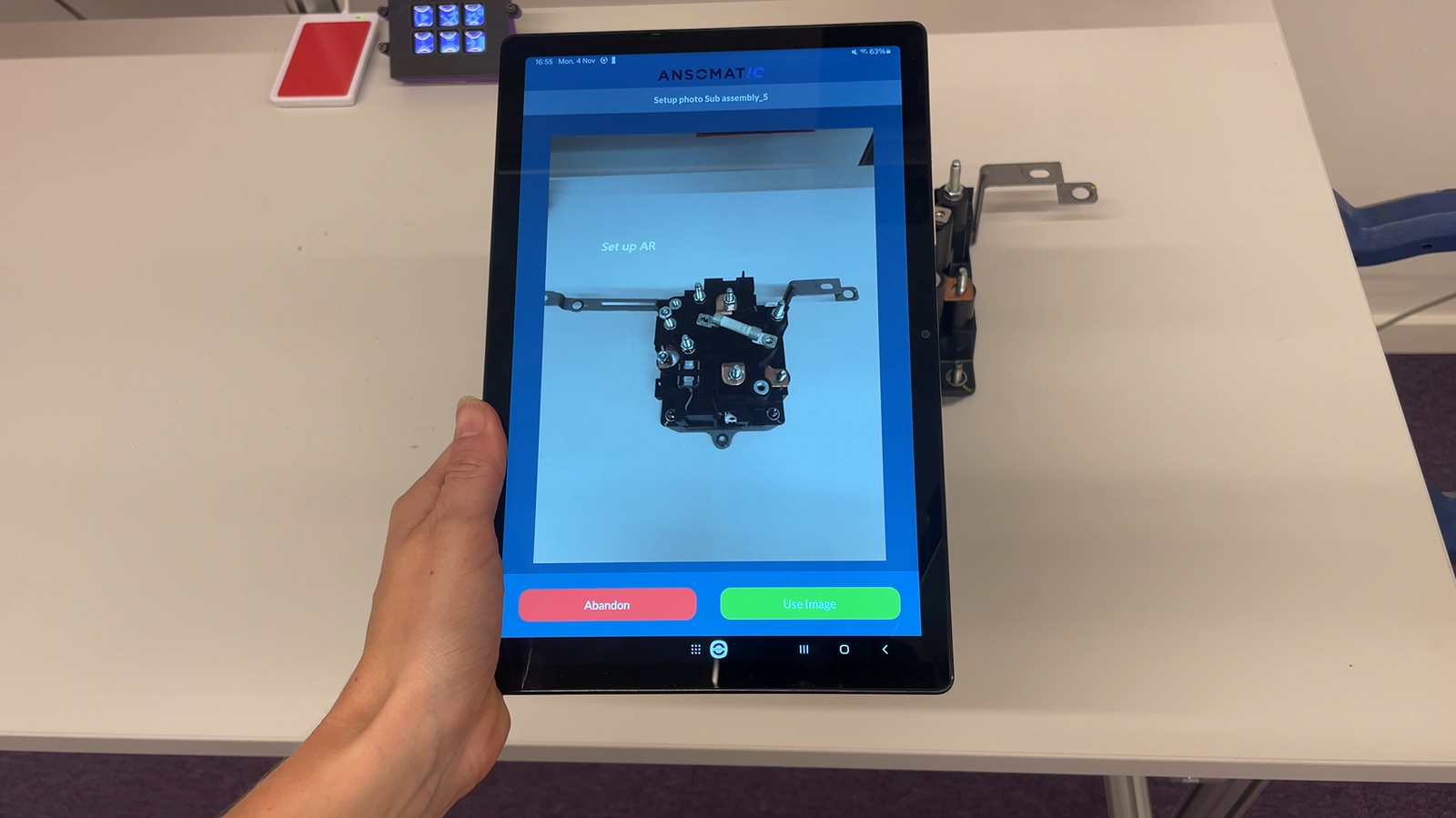
Often the most valuable data:
👉 This is where real continuous improvement starts.
Data can be stored in:
👉 The key: structured, contextual, and accessible data
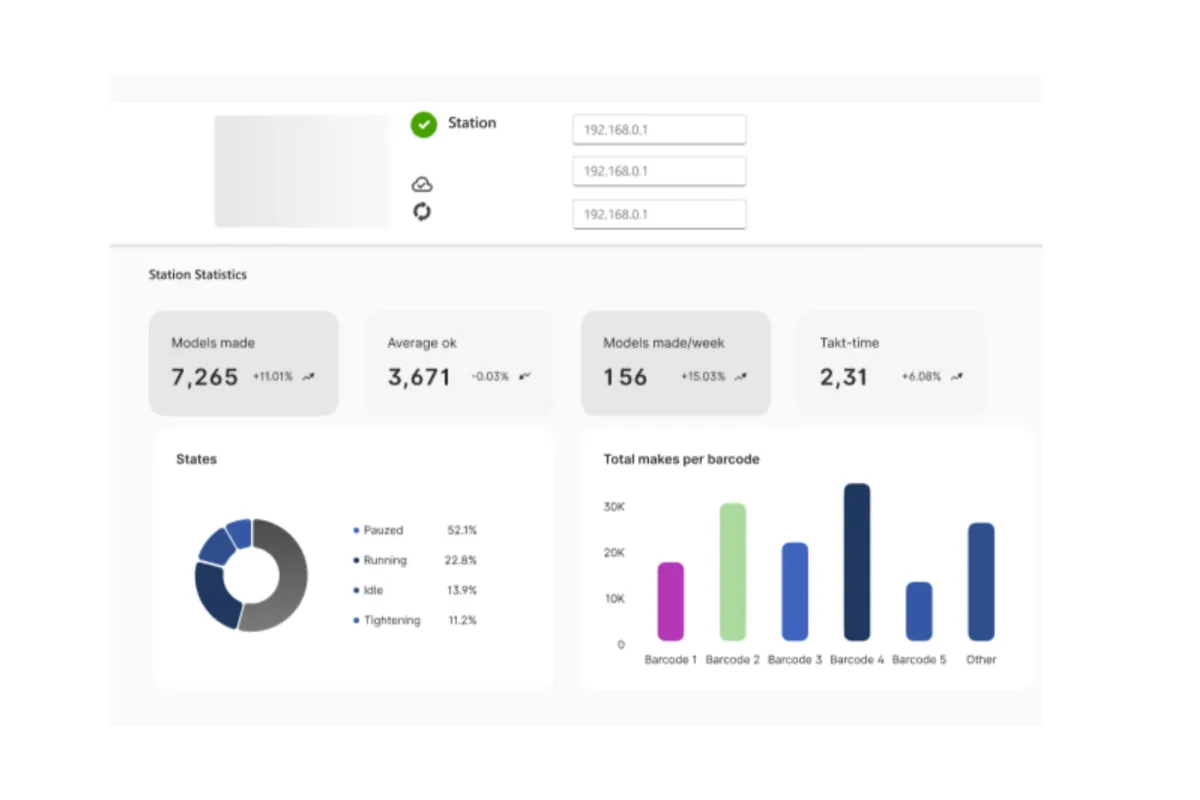
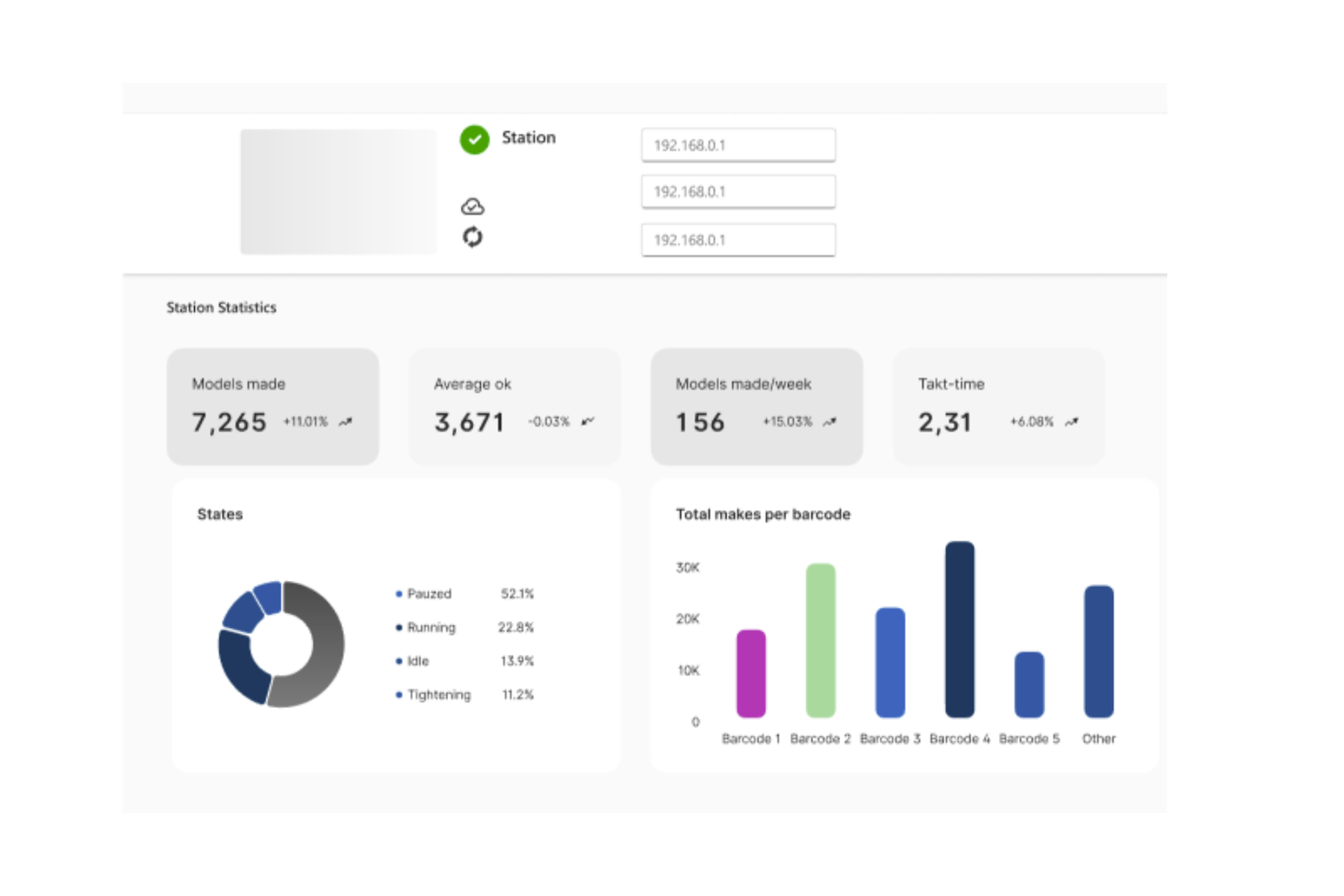
Turn raw data into insights using KPI dashboards →
👉 https://ansomat.co/operator-guidance/data-traceability/kpi-dashboards
Key KPIs:
Improvement KPIs:
Once data is collected, it can be analyzed to uncover clear improvement opportunities:
Before taking action, validate what is actually driving the issue:
👉 Compare top-performing vs. average operators to identify what works best in practice—differences in execution, timing, or behavior often reveal hidden best practices that can be standardized.
Enhance instructions using →
👉 https://ansomat.co/operator-guidance/work-instruction-solutions/digital-work-instructions
Improvements include:
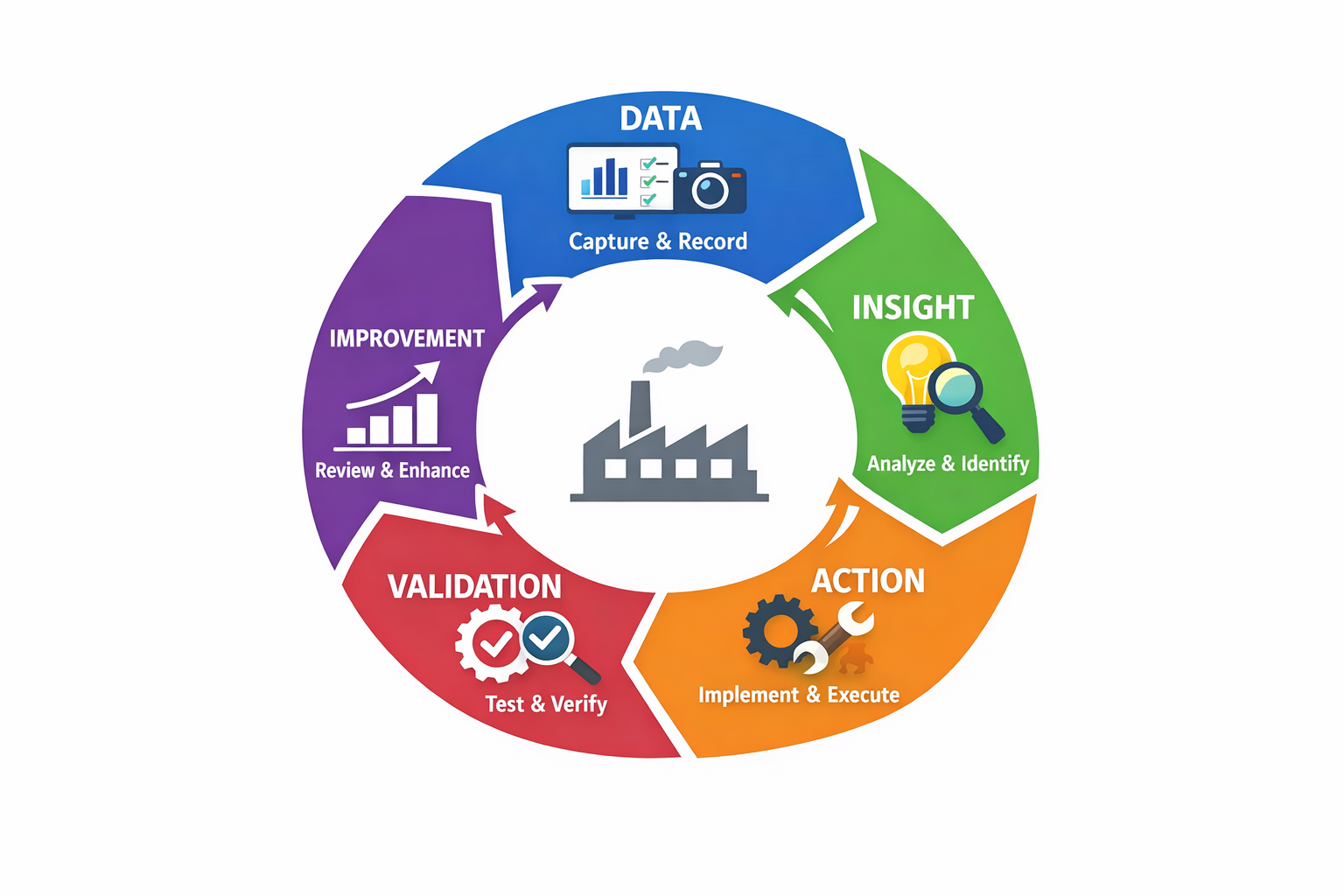
👉 Collect → Analyze → Improve → Standardize → Repeat
This creates a self-improving manufacturing system.
Learn more about traceability →
👉 https://ansomat.co/operator-guidance/data-traceability
With detailed execution data, you can:
👉 This level of traceability helps win new contracts.
A modern system enables:
👉 Increasingly a requirement, not optional.
Understand how key shop floor KPIs translate into real operational improvements.
This overview links common performance issues to targeted actions and measurable results, helping you turn data into better quality, higher efficiency, and sustained continuous improvement.
| KPI | Typical Issue Observed | Action Taken | Example Improvement |
| First-time-right (FTR) rate | High rework or defects | Added machine vision checks + clearer step validation | 75% → 89% FTR |
| Error rate per step | Specific step causing frequent errors | Simplified instructions + added visual guidance | 12% → 4% error rate at step |
| Process deviations | Steps skipped or done incorrectly | Enforced step-by-step flow with mandatory confirmations | Deviations reduced by 80% |
| Operator dwell time | Certain steps take too long or vary widely | Improved ergonomics + broke steps into smaller tasks | 45s → 30s per step |
| Shift/team comparison | One shift underperforming | Shared best practices + targeted training | Gap reduced from 10% → 3% FTR difference |
| Number of suggestions | Low operator engagement | Introduced feedback prompts in instructions | 5 → 25 suggestions/month |
| Implementation rate | Ideas not being executed | Structured review + faster approval loop | 20% → 65% implementation rate |
| Error reduction trends | Errors not decreasing over time | Introduced validations + continuous updates to instructions | Errors reduced by 60% over 3 months |
Many shop floor data initiatives fail not because of a lack of effort, but because the data is poorly structured from the start. Too often, manufacturers rely on static formats like PDFs or spreadsheets that may appear organized but are difficult to integrate with systems such as process control tools or traceability software for manufacturing. This creates a disconnect—shop floor data exists, but it isn’t easily usable or connected to the broader manufacturing ecosystem. Without proper context and structure, teams struggle to interpret the data, limiting its value for real-time decision-making and continuous improvement.
A lack of standardization is one of the biggest barriers to using shop floor data effectively. When data is captured in inconsistent formats, teams spend valuable time cleaning and reformatting information before they can extract insights. This slows down improvement cycles and reduces the impact of manufacturing data collection software. By contrast, a standardized, digital approach ensures that shop floor data is captured in a consistent format from the outset, making it easier to integrate with traceability software for manufacturing and other systems. This enables faster analysis, better process control, and more reliable continuous improvement.
Another common issue is collecting shop floor data without a clear purpose. Many manufacturers gather large volumes of data but fail to align it with quality, compliance, or operational improvement goals. Without integration into traceability software for manufacturing, this data remains siloed, resulting in limited visibility across the shop floor. The most effective manufacturers focus on capturing the right data in a structured way using manufacturing data collection software, ensuring full traceability and transparency. This approach enables faster root cause analysis, stronger process control, and a scalable continuous improvement loop—without adding unnecessary complexity.
At ITM, a no-fault-forward system is implemented using digital work instructions combined with machine vision validation to ensure high first-time-right performance. While this significantly reduces errors, occasional false positives can still occur. In such cases, the team relies on detailed shop floor data, including stored images from every assembly step, to quickly trace back the issue. Instead of dismantling a full product to identify the root cause after a failed end-of-line test, engineers can review the digital record and pinpoint exactly where the deviation happened. This reduces investigation time dramatically—from around 14 hours of disassembly to just 30 minutes—demonstrating the power of structured data capture for rapid problem-solving and continuous improvement. Learn more in the ITM case study: https://ansomat.co/references/itm-power-from-manual-assembly-risk-to-99-first-time-right
At Autocraft, every engine assembly is documented through a complete digital “birth certificate,” where images are captured at each critical step of the process. This data is not only used internally but is also shared with customers via a dedicated portal, providing full traceability of all shop floor activities. As a result, there is complete transparency on what happened during production, supported by visual evidence. This eliminates any ambiguity or debate about where an issue may have occurred, strengthening customer trust while enabling faster and more objective root cause analysis when needed. Read the full Autocraft reference: https://ansomat.co/references/autocraft-no-fault-forward-engine-assembly-reman
Most manufacturers already have data, but not the right data.
By leveraging:
You unlock:
✔ Continuous improvement
✔ Higher quality
✔ Faster onboarding
✔ Stronger competitiveness
If you’re not capturing operator-level data, you’re missing the most critical part of your process.
👉 The future of manufacturing isn’t just connected machines, it’s connected workers.


