In aerospace manufacturing, even the smallest assembly error can have significant consequences. Every component must be assembled according to strict procedures, with complete traceability and verification to meet the industry's demanding quality standards.
During the assembly of a critical aero booster, Safran required a solution that could eliminate operator errors while maintaining an efficient production process.
Ansomat implemented its Digital Error-Proofing solution, combining augmented reality guidance, machine vision, controlled tightening and real-time process control to ensure every assembly step is completed correctly the first time.
The aero booster is a critical aircraft engine component that requires precise and repeatable assembly. Every critical action must be performed in the right sequence, in the right position and with the right process parameters.
For fastening operations, this means controlling the fastener position, tightening sequence, torque and angle, while ensuring the operator follows the correct assembly workflow.
Traditional work instructions alone cannot prevent wrong sequences, missed steps or positioning errors.
Safran needed a solution that could guide the operator, control and verify critical actions in real time, and provide full production traceability.
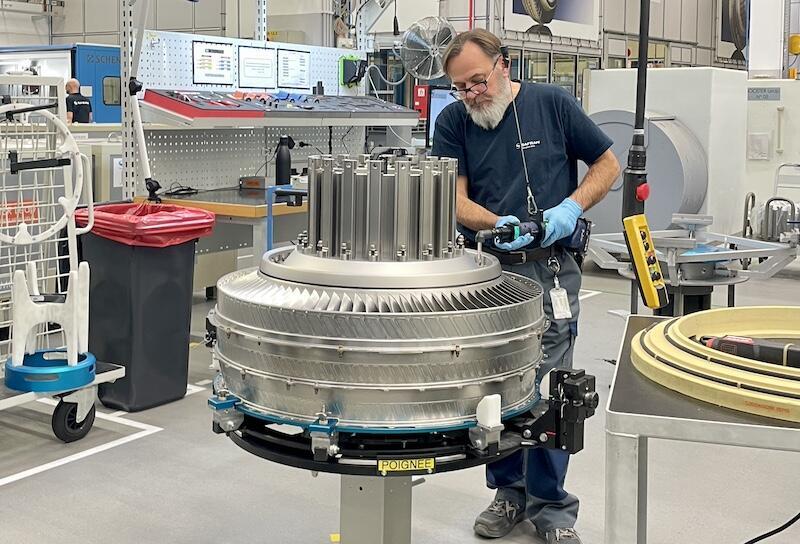
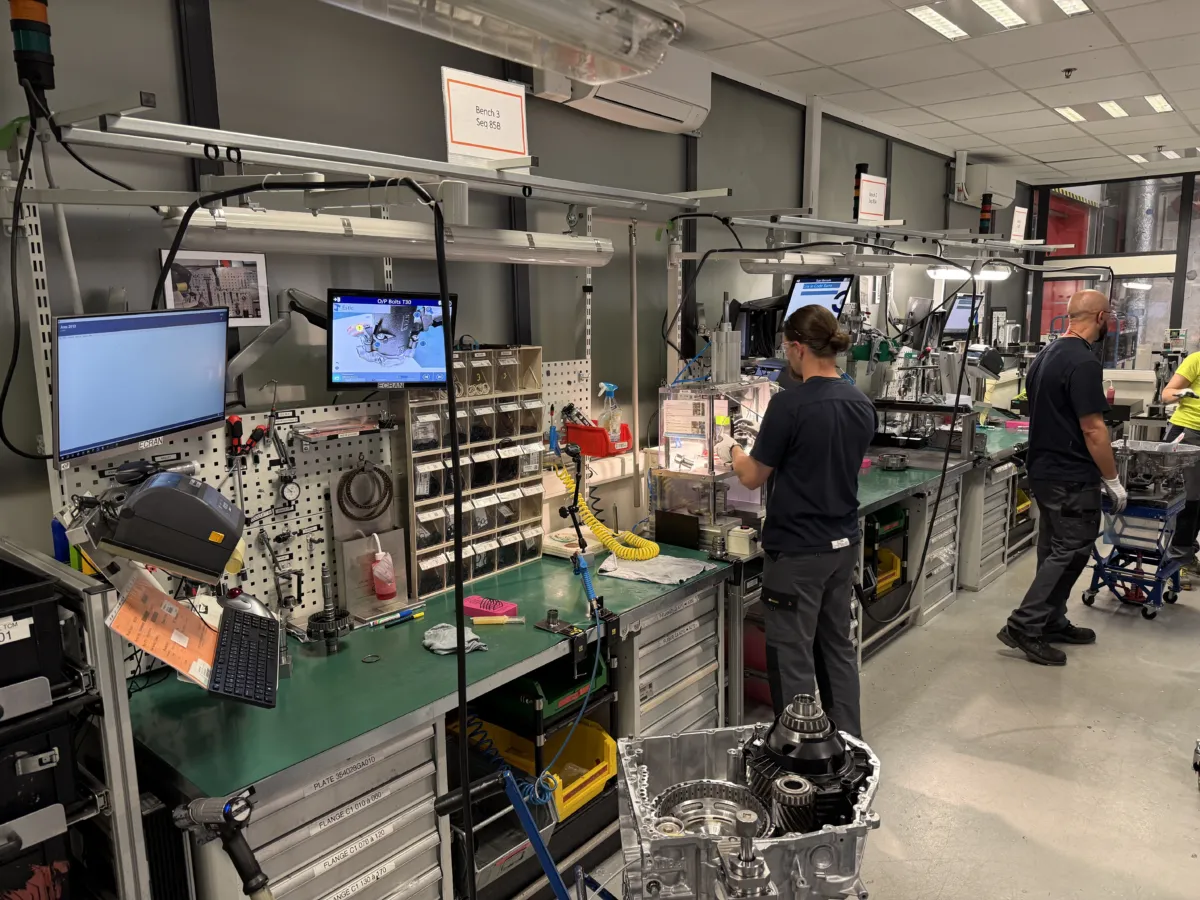
Ansomat integrated operator guidance, tools and vision into one controlled assembly process.
1. Step-by-step operator guidance
The right work instruction is automatically shown on screen at the right moment.
2. Integrated tightening tools
High-torque electric nutrunners are connected to the system, providing real-time torque and angle feedback.
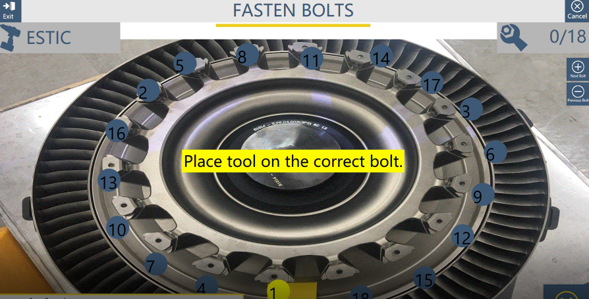
3. Augmented Reality guidance
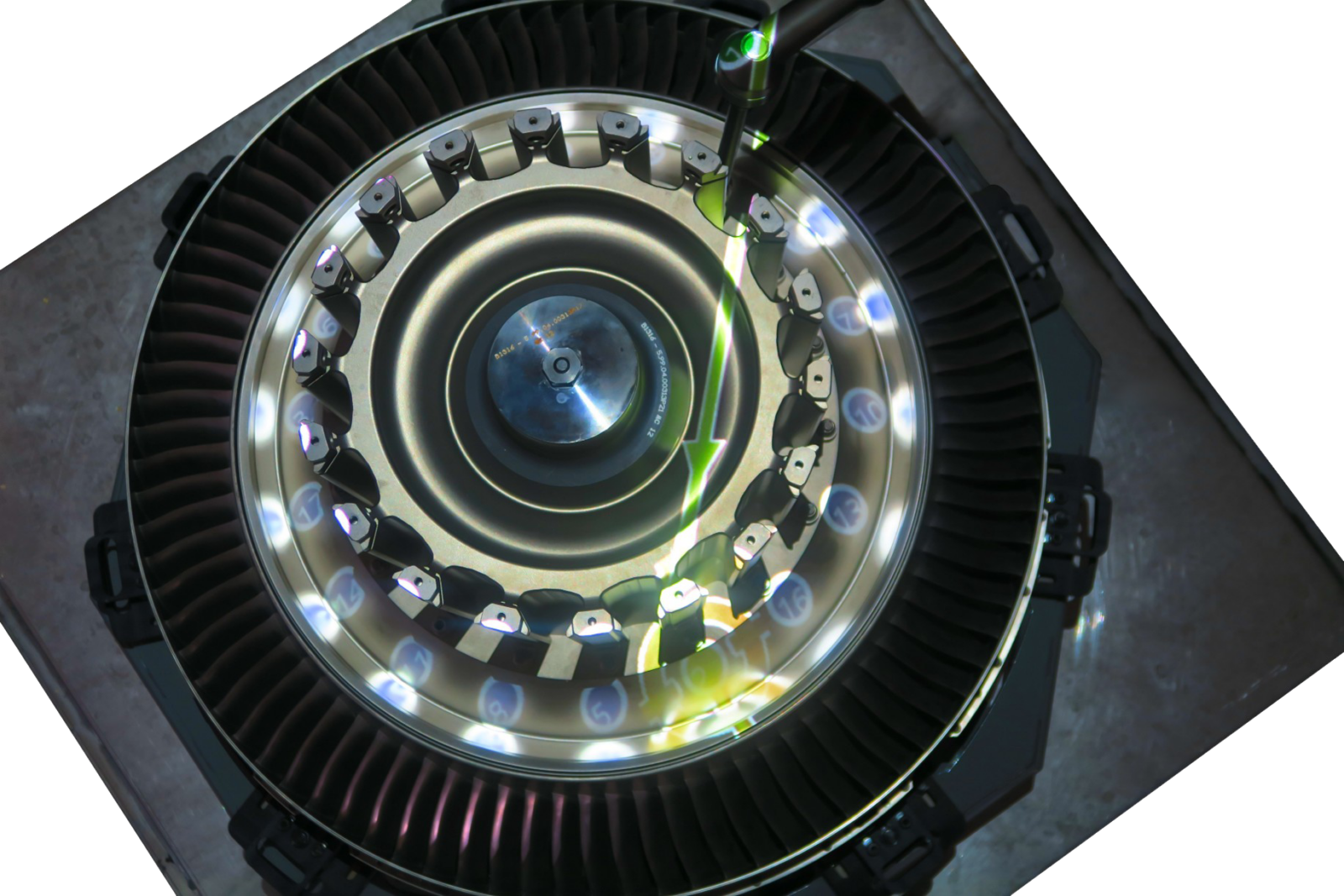
Work instructions are projected directly onto the aero booster, giving the operator a clear visual indication of where and what to do.
4. Vision verification
Machine vision verifies critical operator actions and confirms that required assembly steps have been completed correctly.
5. Tool position control
The system verifies that the tool is on the correct bolt, preventing tightening in the wrong position or sequence.
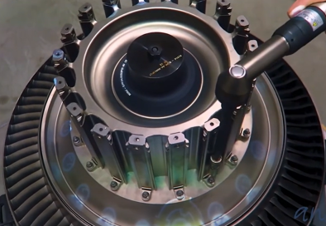
6. Automatic picture capture
The vision system captures images of the completed assembly as visual quality evidence.
7. Full traceability
Every step is recorded, including operator actions, tightening results, torque and angle, process data, vision checks and images.
One integrated system helps the operator perform the right action, in the right place, at the right time, while Safran gets complete proof of the assembly process.
All tools and technologies are connected in one controlled workflow, guiding the operator, controlling critical operations, verifying actions and recording every step.
| Integrated technology | What it does |
| Barcode Scanner | Identifies the product and automatically loads the correct variant and assembly program. |
| AR Projector | Projects work instructions and visual guidance directly onto the work area, showing the operator what to do and where. |
| Electric Nutrunners | Controls fastening with the correct program and provides real-time torque and angle feedback. |
| Machine Vision | Verifies operator actions and component presence, and captures pictures as quality evidence. |
| RTLS / Tool Positioning | Monitors the tool position to ensure operations are performed at the correct location. |
| Full shop floor traceability | Controls the workflow, validates each step and records all process data for full traceability. |
The complete solution is integrated with Safran Group's IT systems and requirements, ensuring seamless data exchange with the existing production environment.
Together, these technologies turn work instructions into an active, error-proof assembly process. The operator is guided through each step, connected tools are automatically controlled, critical actions are verified in real time, and the complete process is recorded.
Right instruction. Right tool. Right action. Verified result.
The integrated solution helps Safran improve assembly quality while making complex operations easier for the operator.
Operator guidance, vision and process control help prevent errors before they happen.
Critical actions, including fastening, are controlled and verified in real time.
Clear visual guidance reduces uncertainty and supports faster training and consistent execution.
Every critical action, process result and inspection is automatically recorded.
Digital workflows can be quickly adapted to process changes and new product variants.
The result: fewer errors, less rework, consistent quality and complete production traceability.
| Traditional Assembly | Ansomat Digital Error-Proofing |
| Paper or screen-based work instructions | ✅Interactive augmented reality guidance |
| Operator determines next assembly step | ✅Software guides every assembly step |
| Manual verification of bolt sequence | ✅Automatic sequence validation |
| Limited visibility of assembly status | ✅Real-time process monitoring |
| Errors detected during inspection | ✅Errors prevented before they occur |
| Manual documentation | ✅Automatic digital traceability |
| Higher operator dependency | ✅Standardised, repeatable assembly |
Whether you manufacture aerospace components, automotive systems or other safety-critical products, Ansomat helps manufacturers eliminate manual assembly errors through digital error-proofing, augmented reality guidance, machine vision and intelligent process control.