Choosing the right tightening tool is critical for any modern assembly process. Whether you’re using an electric screwdriver or nutrunner, digital torque wrench, or advanced DC torque tools, the decision directly impacts productivity, accuracy, operator safety, and long-term product quality.
Yet many companies still rely on outdated air tools or basic solutions that lack control and traceability. Understanding the differences between smart torque wrenches, electronic torque wrenches, and pulse tools is essential to making the right choice.
A Brief History: From Air Tools to Electric Systems
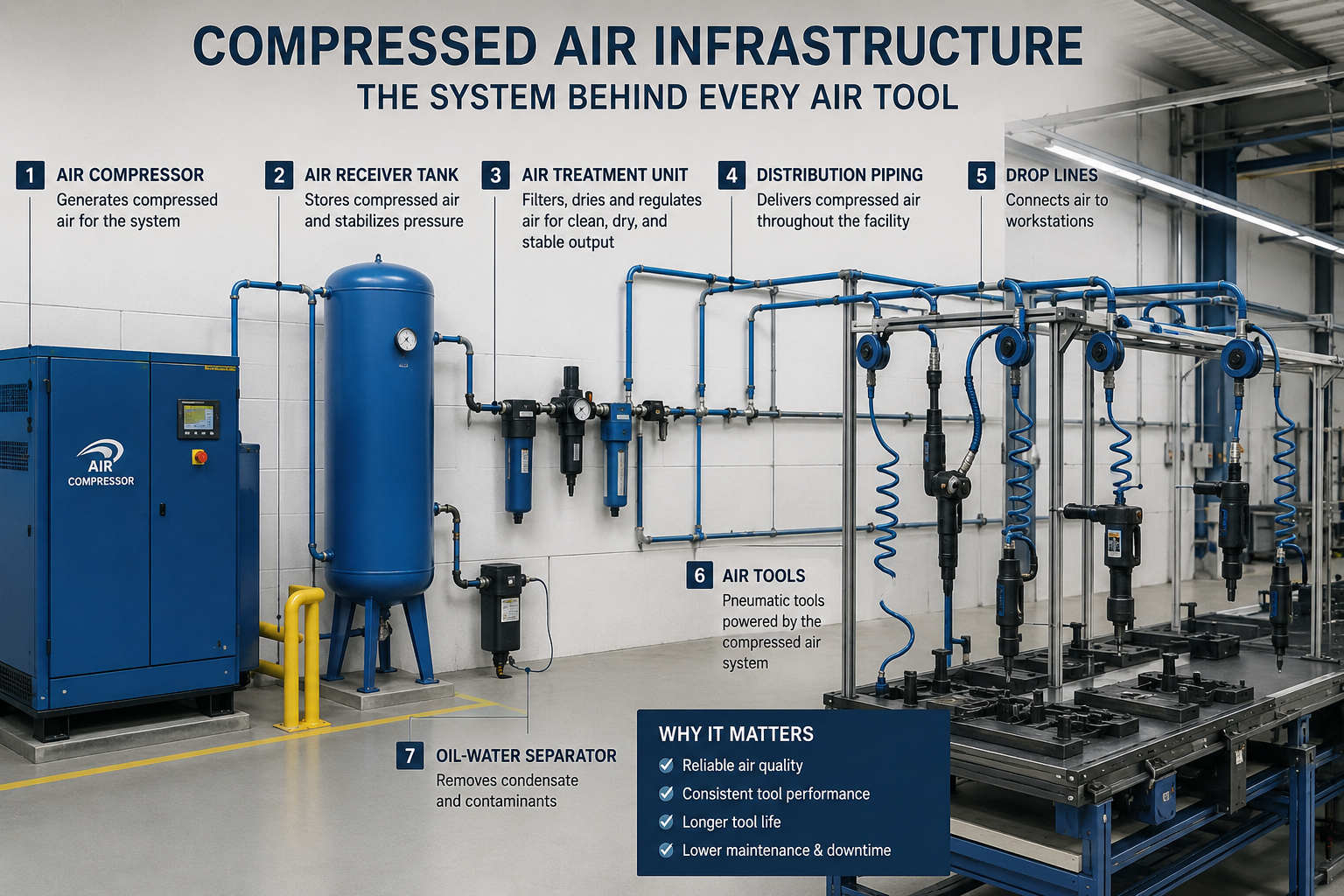
For decades, pneumatic (air) tools dominated industrial assembly. They were robust, relatively simple, and widely available. However, they come with a hidden cost: infrastructure.
Air tools require a full compressed air system - compressors, piping, maintenance, and energy consumption. While they were once the standard, they offer limited control over torque and virtually no data feedback.
As manufacturing evolved, so did the need for precision, traceability, and smarter tooling. That’s where electric solutions entered the picture.
DC torque tools - also known as electronic screwdrivers or nutrunners - are designed for applications where accuracy and traceability are critical.
These tools use an electric motor combined with advanced control systems to deliver:
These tools use an electric motor combined with advanced control systems to deliver:
Because of these capabilities, DC tools are widely used for critical joints (A-joints) where safety and quality cannot be compromised.
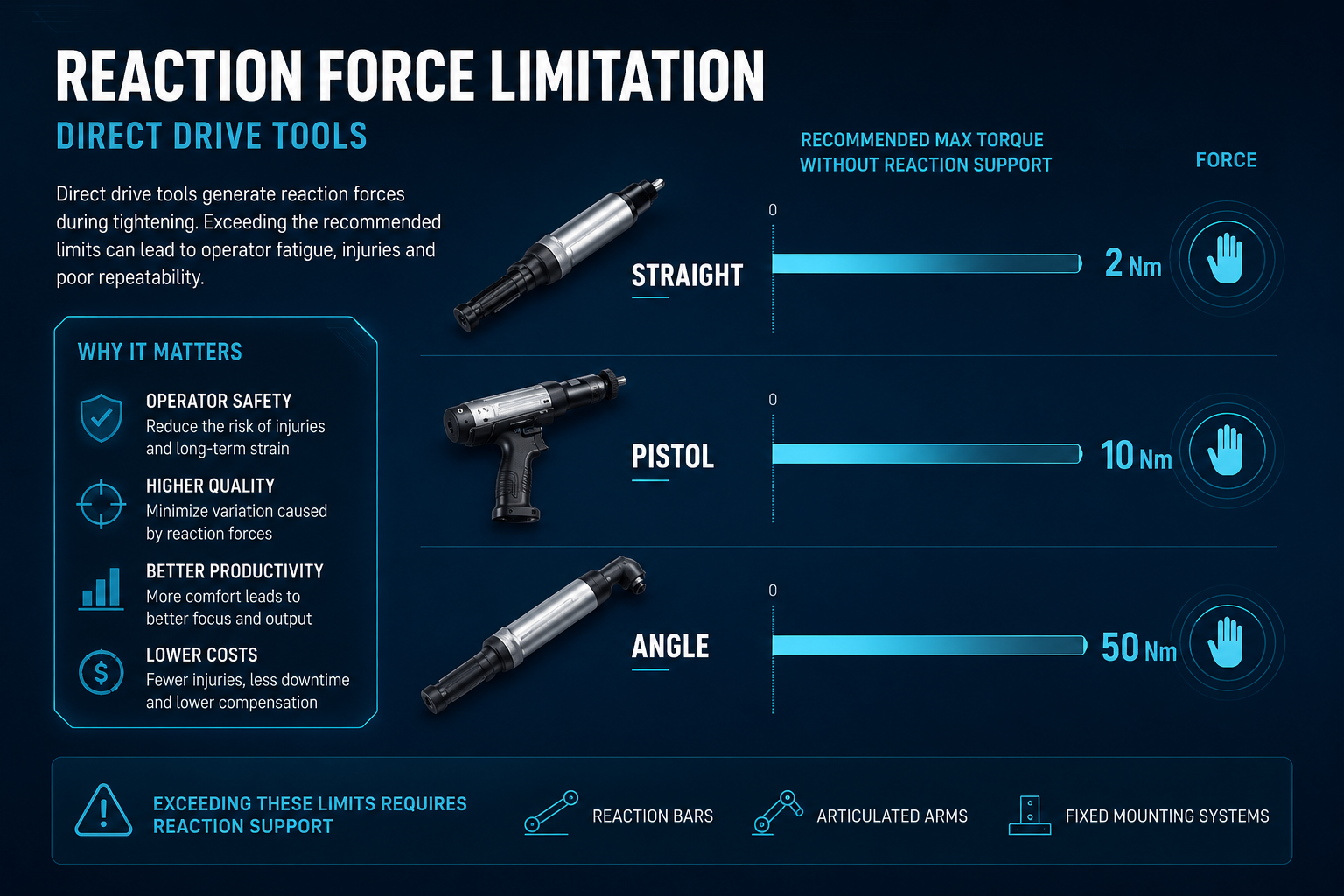
However, there is a limitation: reaction force. Since the motor is directly connected to the output shaft, operators experience torque feedback (kickback), especially at higher torque levels.
When using direct-drive electric screwdrivers or DC torque tools, reaction forces can lead to:
Typical limits without reaction support are:
Above these levels, companies need reaction arms or support systems—adding cost, complexity, and reducing flexibility.
Pulse tools offer a powerful alternative to traditional DC torque tools, especially in high-torque applications.
Instead of continuous torque, pulse tools use rapid impulses. When running freely, they rotate at high speeds (up to 8,000 rpm). Once the joint is engaged, the tool delivers short torque pulses to tighten the fastener.
This results in:
Another major advantage is accuracy. Unlike standard electric screwdrivers that stop based on torque, pulse tools tighten based on bolt stretch, making them closer to clamping-force accurate.
This makes pulse technology ideal for applications where joint integrity is critical.
As torque requirements increase, traditional DC tools become harder to use safely. In many cases above 50 Nm, reaction forces become difficult to manage without additional support systems.
Pulse tools solve this problem by minimizing peak forces, allowing operators to work:
This is why pulse tools are rapidly gaining popularity in industries like automotive and heavy assembly.
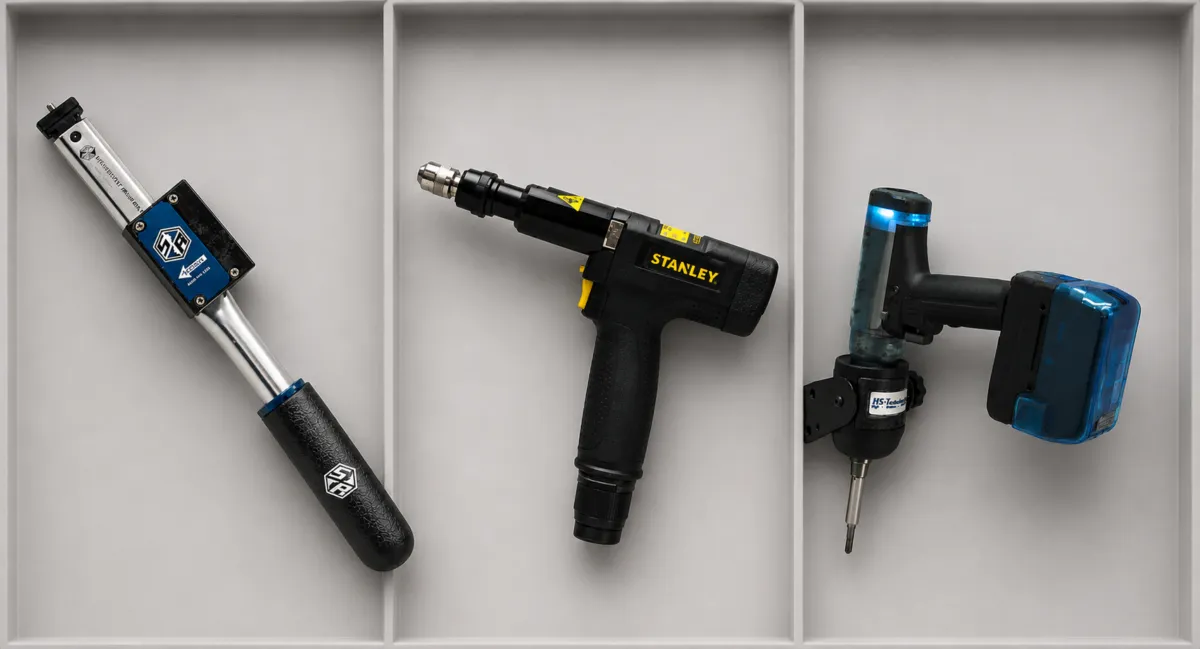
A digital torque wrench - or smart torque wrench - serves a completely different purpose.
Unlike electric screwdrivers or DC torque tools, it does not generate torque. Instead, the operator applies the force manually, while the tool measures it precisely.
This leads to a clear trade-off:
Digital torque wrenches are best suited for:
Many modern electronic torque wrenches also provide:
Because they don’t create reaction force in the same way as powered tools, they are easier to use in tight or sensitive environments.
Each tool type serves a different purpose:
When selecting between DC torque tools, pulse tools, or a digital torque wrench, consider:
There is no single “best” tool—only the best tool for your application.
The tightening process has evolved far beyond simply fastening bolts. Today, it’s about data, control, ergonomics, and reliability.
Companies that invest in modern solutions like electric screwdrivers, pulse tools, and digital torque tools gain a clear advantage:
Moving away from “dumb tools” toward smart, connected tightening systems is no longer optional—it’s a competitive necessity.
Contact us for more info