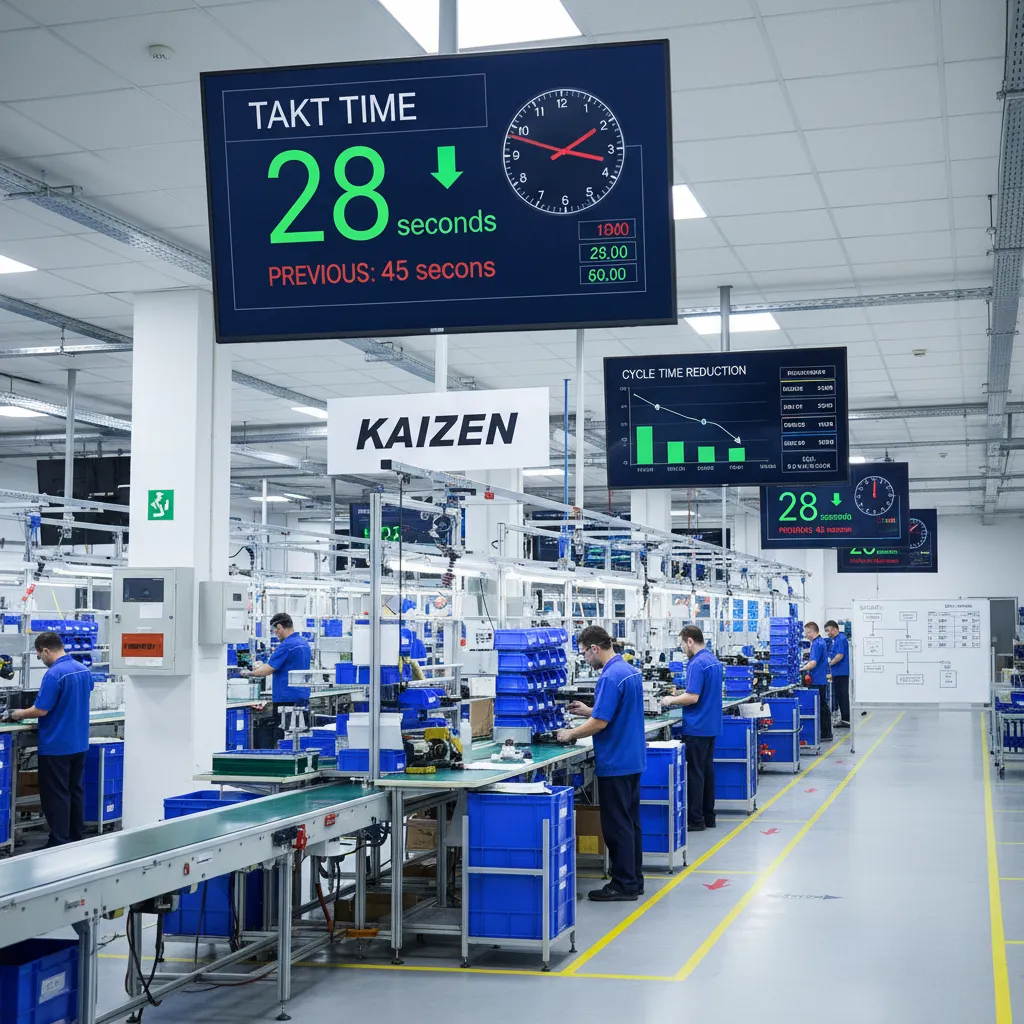
In today’s fast-evolving production environments the pressure to deliver more with less time keeps getting bigger and bigger. It’s not always easy to find quality personnel, quality expectations are high and speed is a huge factor so relying on outdated work instructions like printed manuals or Excel sheets is no longer sustainable.
So say hello to digital task guidance.
By transforming the old static procedures into dynamic, interactive digital work instructions, manufacturers can unlock significant improvements in quality, efficiency, and safety. But don’t just take our word for it, here are 6 statistics that will prove that making the switch pays off.
Companies that implement work instructions software
notice a 30% reduction on operator errors during production. When complex tasks are broken down step-by-step into visuals, videos, or even augmented reality, there’s far less room for misinterpretation by the executor.
Why does this matter? Fewer errors means less scrap, fewer reworks, and lower production price.
In a controlled study comparing both paper-based instructions and digital guidances, staff completed their tasks 21% faster using the digital format. Navigation is quicker or automatic, and the operators don’t lose time with flipping pages or asking their supervisors for clarification in the production process.
What does this mean ? Higher production rate with the same team without having to compromise on quality.
Training new employees can be very time-consuming and sometimes handled unstructured. With digital instructions, standard knowledge becomes easy to access and easy to follow. What is the result? There is a 40% faster onboarding speed for new staff, even if they have a job with high complexity.
Why is this critical: In industries with high staff turnover or seasonal peaks, this is a game-changer because companies can quickly integrate new staff.
Statistics show that up to 35% of all unplanned downtime in manufacturing are caused by human mistake. These can often be linked to the fact that the given instructions were unclear or outdated. The presence of digital guidance helps prevent these issues by simply delivering the right steps, at the right moment on a screen.
What is the impact: There will be more uptime and fewer interruptions.
Line changeovers can be very time consuming. But when digital instructions are used for the setup, cleaning and/or configuration tasks, manufacturers have seen changeover times being cut in half and tis all thanks to the use of standardized, visual task guidance.
Translation to ROI: All the time that is saved during changeovers means added time directly to the production process.
A lot of the workplace incidents are due to simple miscommunication or skipped steps. When using complete checklists, taking the safety confirmations into account, and completely guided procedures, this digital task guidance contributes to a 70% reduction in safety-related incidents.
For safety reasons: This is more than a benefit—it’s a necessity.
To help you see these benefits, here’s a quick visual summary of these six performance improvements:


Digital task guidance isn’t just another tech upgrade. The implementation of this is a strategic move toward higher efficiency, faster learning, and safer operations. The numbers don’t lie if you are active in discrete manufacturing, food production, or high-mix assembly, setting aside the outdated instruction methods will deliver your company a lot of gains.
If you want to see how digital guidance could boost your own company performance?
Contact us at Ansomat and discover how our digitised and visual work instruction solutions are helping companies minimizing the production cost.