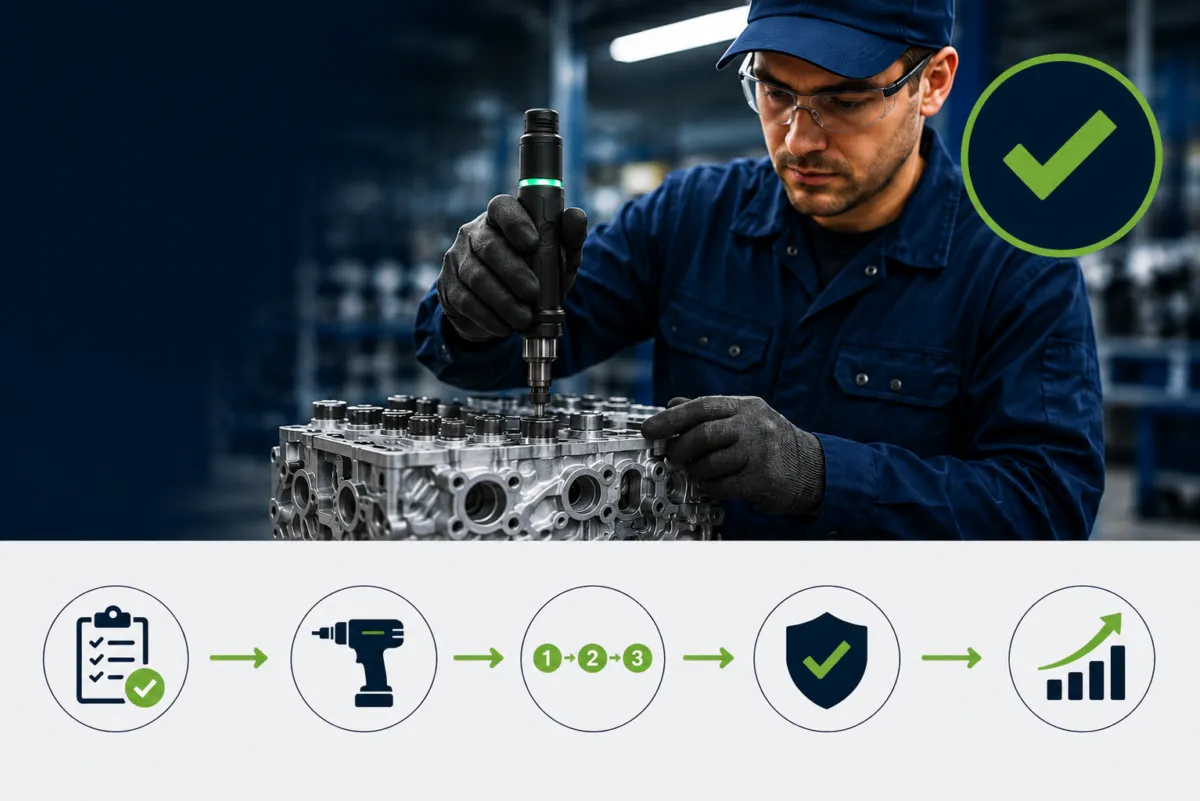
For several decades, production staff have relied on printed manuals or even written notes as a guideline to get their job done correctly. Then there was the entrance of computers, tablets, and even digital work instructions. And now, a new era is introducing itself where all tasks that need to be performed appear right in front of your own eyes, exactly when and where you need them.
Welcome to the world of augmented reality (AR) in the work area. But before we look where we are now, it’s worth understanding how we got here.


The traditional factory literally ran on paper. Tasks were documented in printed manuals, instructions to be hung and hand-written notes passed from one shift to the next one. This method was applied for many years but it came with major downsides:
With paper you needed some prior knowledge of the task you had to perform. If there was no one present to ask questions to, good luck interpreting the instructions.

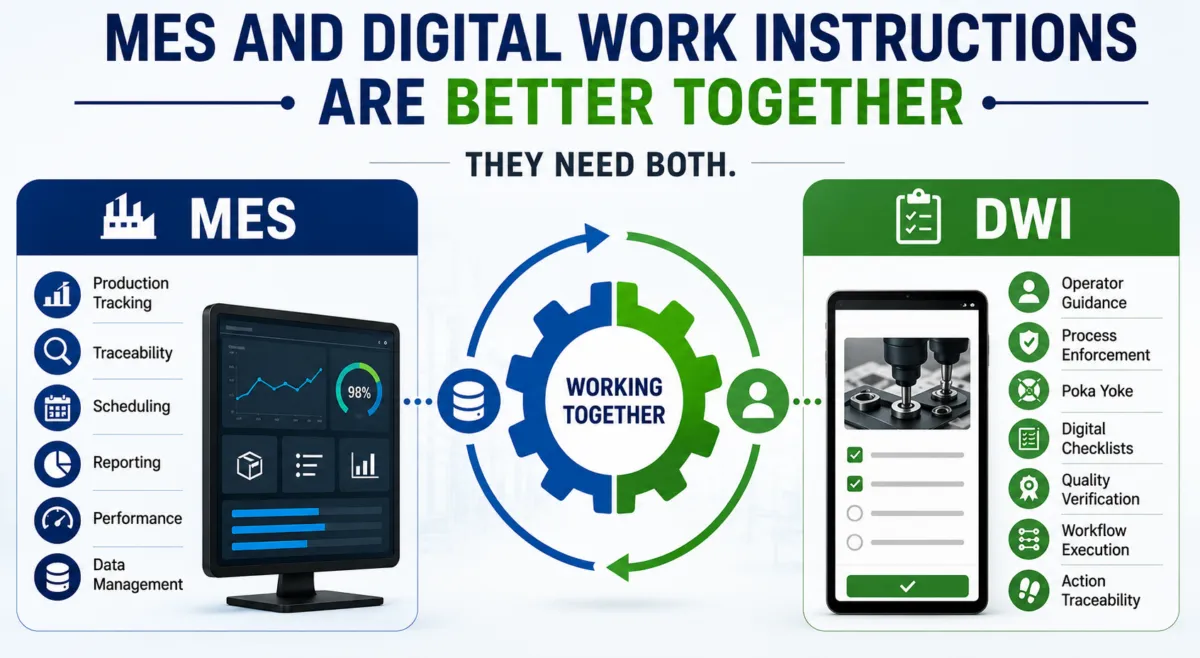
Digital work instructions solved many of the paper era issues. These instructions were displayed on desktops, tablets or work area terminals. This provided:
Specialized companies began helping manufacturers digitize their workflows, leading to faster training of the staff, fewer errors occurred and better error detection.
But the digital screens also were limited. Employees still have to stop, look away from the task, scroll down and interpret instructions on a separate device. So the workflow was interrupted.

With AR, the instructions follow the user, so he always knows which step to take next . Instead of reading a checklist on a tablet, operators see a virtual overlay on the actual machine, so they are guided step by step.
This is no longer science fiction. AR brings significant benefits to both production processes and maintenance tasks, even if they are performed by less experienced workers
Each step in the evolution from paper to projected augmented reality has merely one goal: showing the right instruction to the right person at the right time, with as little margin as possible
AR is the most advanced way to support employees in their work area.
Of course not every task needs AR but it can have many benefits. Just think of complex setups, the frequent change of product lines, or a mix of low-volume assembly. If precision and repeatability are critical then AR can significantly improve overall performance. A good example of good integration is ar in automotive.
And this is the best part? You don’t need to start from scratch if you have already created digital instructions. Adding AR is a natural next step in the previous created digital instructions.
Guidance on the work floor has come a long way from written notes to real-time, on-screen guidance. The future of industrial work isn’t just digital anymore, AR adds real-time support and precision making it a game changer.
Curious to see what AR could look like in your production environment?
Contact us at Ansomat and discover how AR and projection-based guidance can take your operations to the next level.