In manufacturing, productivity metrics often dominate management discussions. Throughput, cycle time, and equipment utilization are closely monitored across the factory floor. Yet one KPI has a greater impact on profitability, customer satisfaction, and operational excellence than almost any other:
First-Time-Right measures the percentage of products that are manufactured correctly the first time without requiring rework, repair, or additional inspection. It is one of the clearest indicators of process quality and operational maturity.
Manufacturers with high First-Time-Right rates reduce waste, minimize costs, improve delivery performance, and build stronger customer trust. Those with low FTR often find themselves trapped in an expensive cycle of rework, scrap, production delays, and quality complaints.
First-Time-Right Manufacturing refers to producing a product correctly on the first attempt, ensuring it meets all quality, process, and customer requirements without corrections.
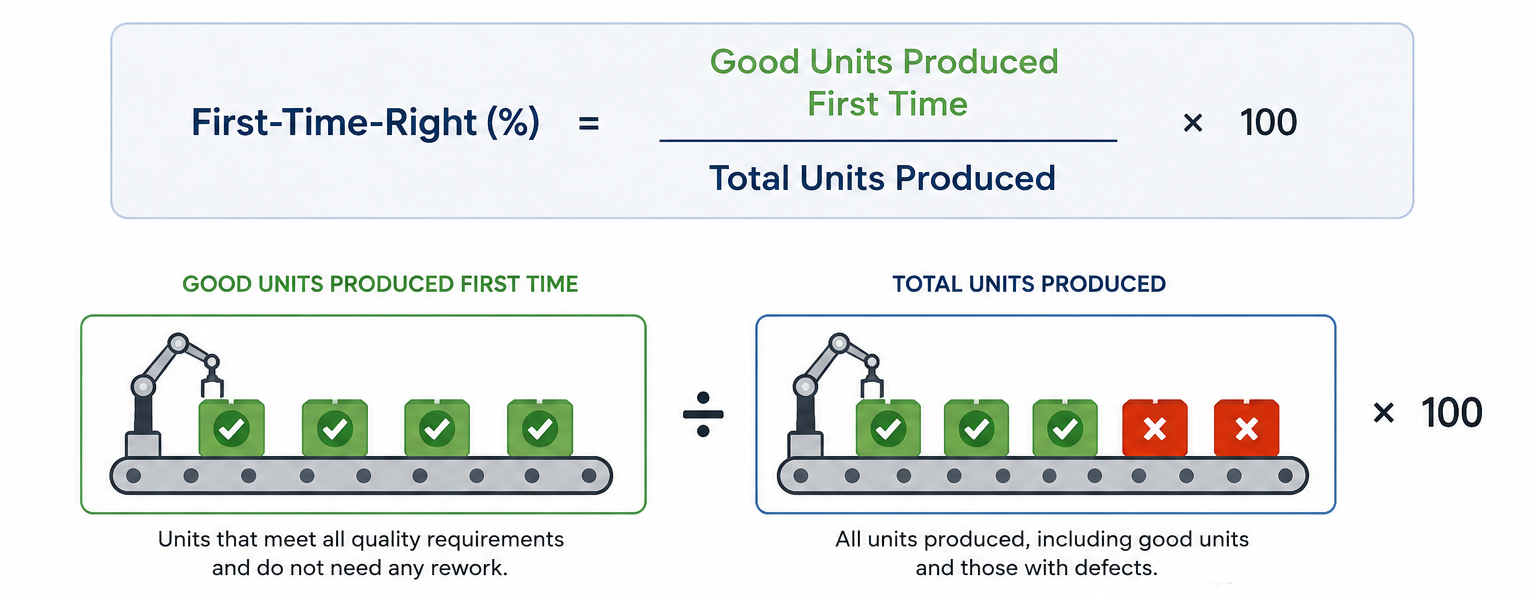
The formula is straightforward:
First-Time-Right (%) = Good Units Produced First Time ÷ Total Units Produced × 100
For example:
First-Time-Right = 95%
While a 95% score may seem excellent, those 50 defective units still consume labor, materials, production capacity, and management attention.
Many manufacturers underestimate the true cost of quality issues.
When an operator makes an error during assembly, the impact extends far beyond the immediate defect:
Studies consistently show that preventing defects is significantly cheaper than correcting them later in the production process.
This is why leading manufacturers focus on preventing errors at the source rather than detecting them at the end.
From Quality Control to Quality Prevention
Traditional quality systems often rely on inspections to catch mistakes after they occur.
The problem?
Inspection does not prevent defects. It only identifies them.
Modern manufacturers are shifting toward a preventive approach where operators are guided through the process and mistakes are eliminated before they can occur. This philosophy is known as No-Fault-Forward Production.
No-Fault-Forward Production ensures that a product cannot move to the next manufacturing step unless the current operation has been completed correctly.
Instead of discovering problems later in the process, errors are prevented in real time.
Examples include:
The objective is simple:
Stop defects at the source before they can travel downstream.
First-Time-Right is the outcome.
No-Fault-Forward is the method.
Organizations that achieve world-class FTR performance typically implement systems that actively prevent human error rather than relying on operator memory or final inspections.
This is especially important in industries facing:
As manufacturing becomes more complex, process control becomes increasingly dependent on technology-enabled operator support. (LinkedIn)
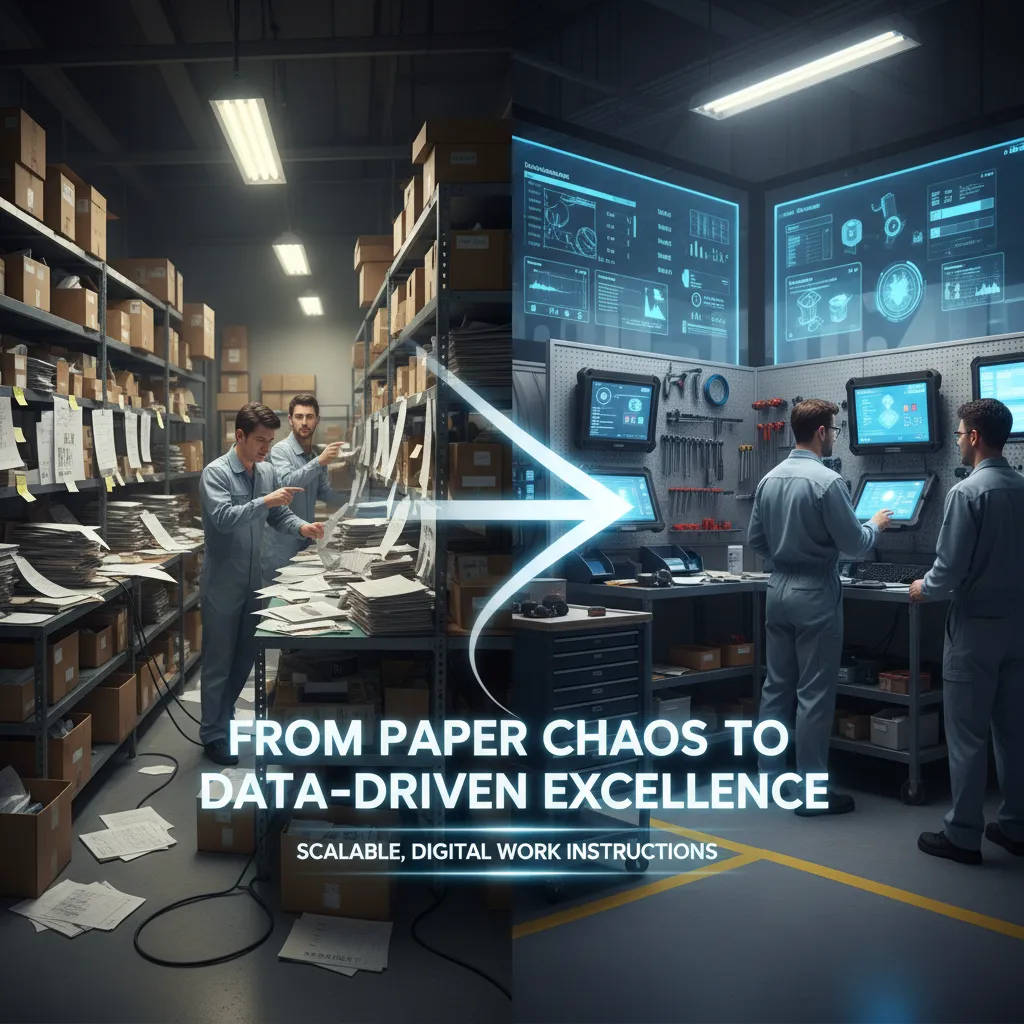
Many manufacturing environments still depend on paper work instructions, tribal knowledge, and operator experience to maintain quality standards. While experienced operators often compensate for process complexity, this approach creates variation, increases training requirements, and leaves room for human error.
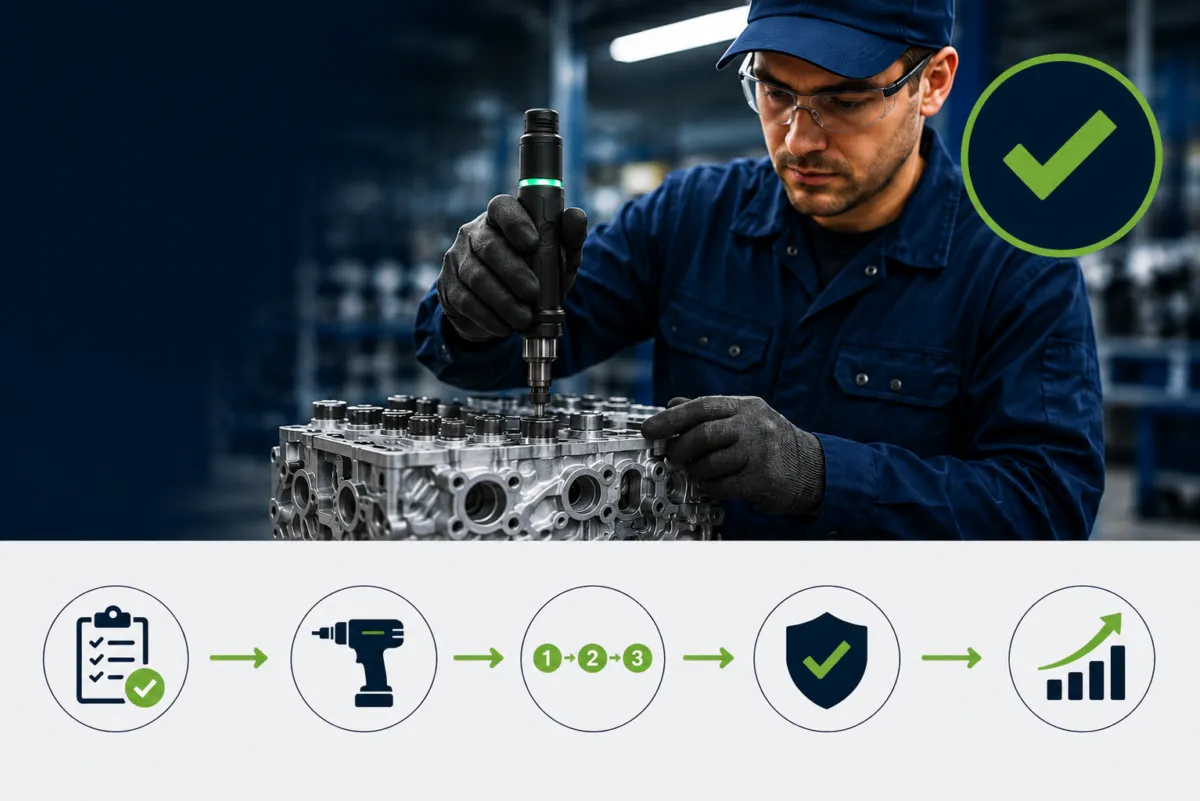
Operator Guidance systems address these challenges by providing digital support throughout the manufacturing process. Rather than relying on memory or post-process inspections, operators receive real-time guidance and validation that helps ensure every task is performed correctly the first time.
Four capabilities are particularly important for improving First-Time-Right performance:
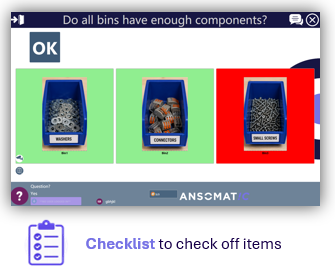
1. Digital Work Instructions
Traditional paper-based instructions can quickly become outdated, difficult to interpret, or disconnected from specific product variants. Digital work instructions provide operators with clear, visual, and contextual guidance tailored to the exact product being assembled.
By standardizing how work is performed, manufacturers reduce process variation and ensure that every operator follows the same best-practice procedure. This consistency is a critical foundation for improving First-Time-Right rates.
2. Tool Integration
Many assembly operations depend on critical process parameters such as torque values, tightening sequences, pressure settings, or measurement tolerances. When these parameters are manually recorded or verified, the risk of mistakes increases.
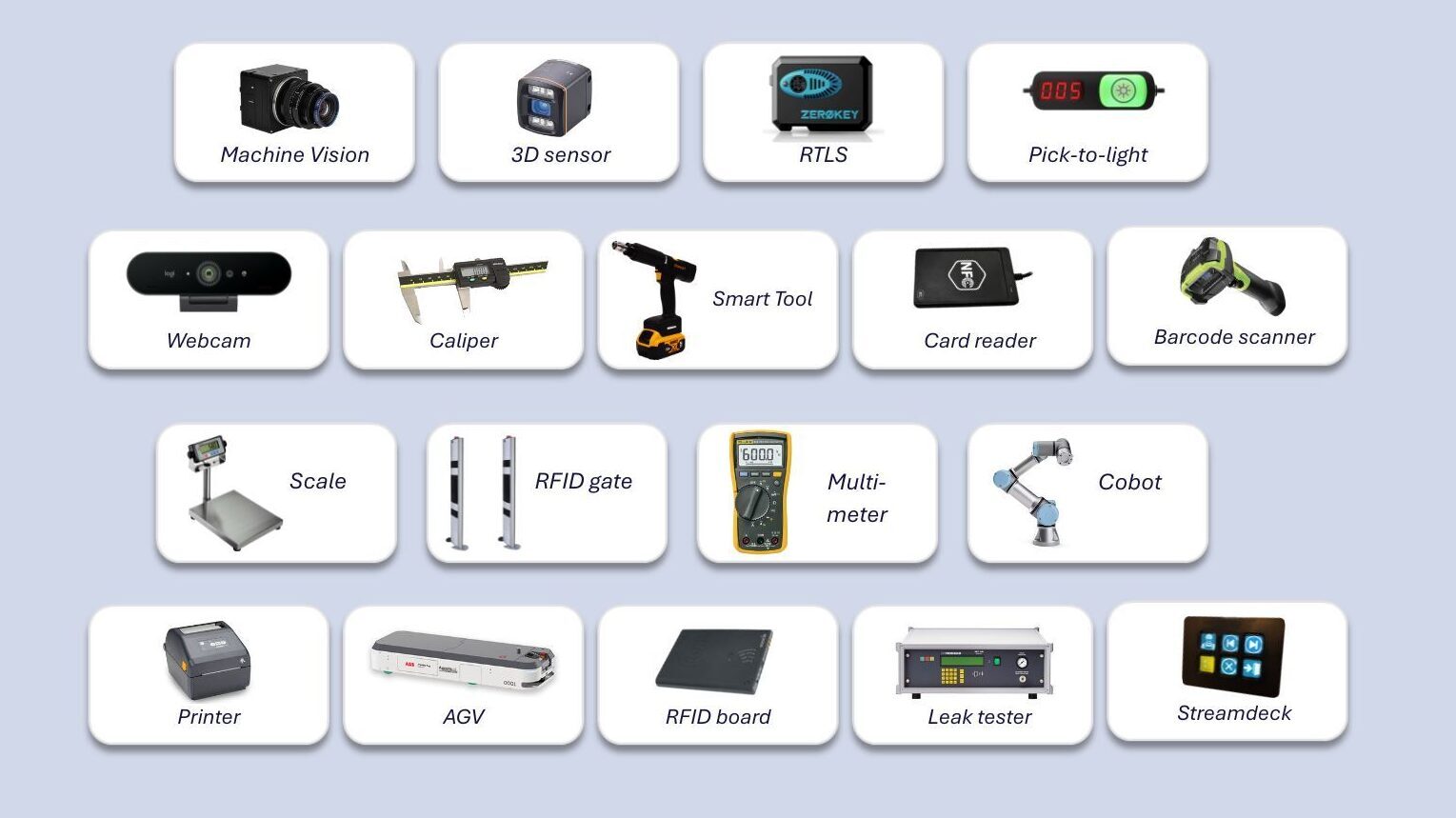
By integrating fastening tools, machine vision, 3D sensors, barcode scanners, PLCs, and other connected devices directly into the production process, manufacturers can automatically validate process parameters and capture results in real time. This eliminates manual data entry, reduces the risk of human error, and ensures that quality requirements are consistently met.
3. Real-Time Validation
One of the biggest causes of defects is allowing mistakes to move unnoticed through the production process. Real-Time Validation prevents this by continuously checking whether each operation has been completed correctly before the next step can begin.
This approach forms the foundation of No-Fault-Forward Production. Operators receive immediate feedback when a deviation occurs, enabling corrective action at the source rather than discovering problems later through inspection, rework, or customer complaints.
4. Full Traceability: Measuring the True First-Time-Right
Full traceability extends beyond recording who built a product and when. Every operator action, tool interaction, process parameter, validation result, and quality check is captured throughout the manufacturing process.
This level of visibility allows manufacturers to measure what could be called the true First-Time-Right. Traditionally, FTR is measured at the finished product level: did the product pass inspection without requiring rework? However, this approach can hide process inefficiencies that occurred during assembly.
For example, a product may leave the line defect-free, yet operators may have repeated process steps, requested assistance from a supervisor, corrected assembly errors, or deviated from the standard workflow before reaching the final result.
With full traceability, these hidden events become visible. Manufacturers gain insight not only into product quality but also into process quality—understanding whether each operation was executed correctly the first time, without intervention, correction, or deviation.
This deeper level of analysis supports continuous improvement, accelerates workforce development, reduces dependency on tribal knowledge, and provides a stronger foundation for operational excellence.
Together, these capabilities transform quality from a reactive inspection activity into a proactive process control strategy. The result is higher First-Time-Right performance, lower operational costs, and a more resilient manufacturing operation.
Many manufacturing KPIs are lagging indicators.
They tell you what happened.
First-Time-Right is different.
It directly influences:
When First-Time-Right improves, almost every other manufacturing metric improves alongside it.
That is why many leading manufacturers consider FTR one of the most important indicators of operational excellence.
Building a Zero-Defect Manufacturing Culture
Achieving high First-Time-Right rates is not solely about technology.
It requires a culture focused on continuous improvement, standardized work, and proactive error prevention.
By combining operator guidance, digital work instructions, tool integration, and No-Fault-Forward production principles, manufacturers can move closer to the ultimate goal:
Zero-defect manufacturing.
In today's competitive manufacturing environment, success belongs to companies that prevent errors before they happen—not those that simply detect them afterward.
If your organization is looking to improve quality, reduce rework, and increase operational efficiency, focusing on First-Time-Right may be the most impactful decision you can make.