
-
Guidage des opérateurs

Ansomat Management System
- Outils de serrage
- Nos solutions
- Industries
- Références
- Réserver une démo
- Free trial

High-torque fastening tools generate torque reaction that must be absorbed somewhere. In repetitive industrial assembly, allowing the operator to absorb this force can increase physical strain and fatigue.
A 3arm torque reaction arm supports the fastening tool, absorbs reaction torque and keeps the tool balanced throughout the working area. This gives operators the freedom to position heavy torque tools accurately without having to continuously support their weight or counteract their reaction force.
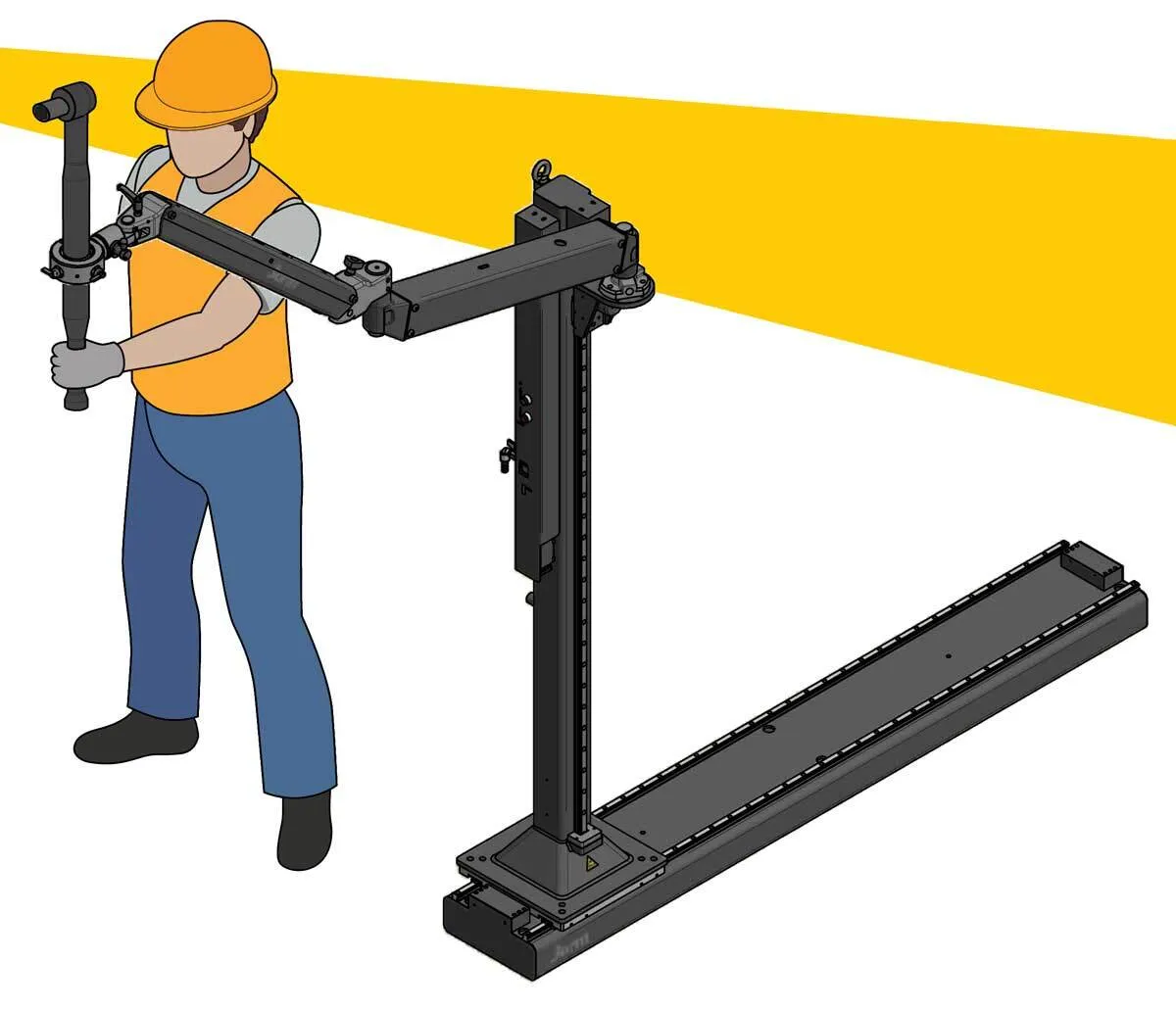
Torque reaction is the opposing rotational force created when a torque tool tightens a fastener. As the tool applies torque to the bolt or nut, an equal reaction acts back through the tool.
At low torque this may be manageable, but higher torque and repetitive fastening can put significant load on the operator's hands, wrists, arms and shoulders. Industrial fastening systems therefore often use either low-reaction tooling or a mechanical system designed to absorb this force.
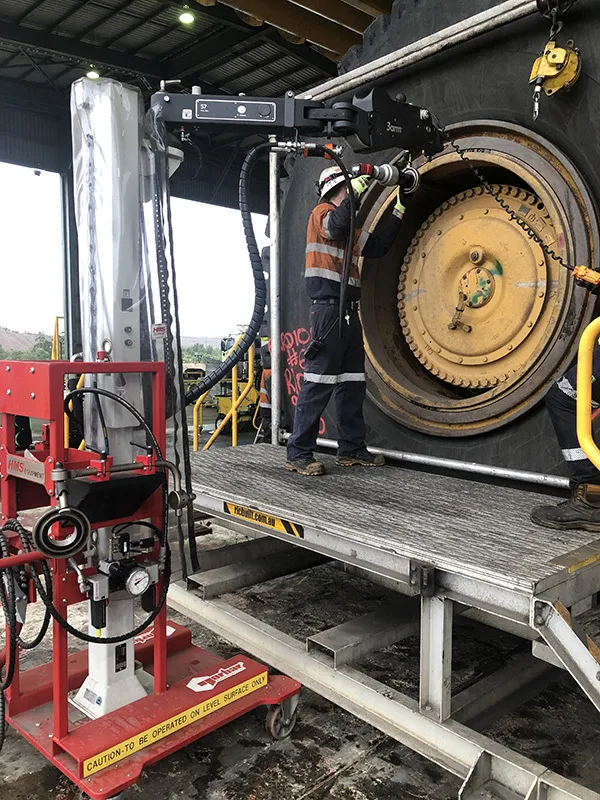
A torque reaction arm is a mechanical support that holds a fastening tool and absorbs the reaction generated during fastening instead of transferring it to the operator.
Unlike a simple fixed reaction bar, articulated torque tool reaction arms also allow the tool to move throughout the workstation. With 3arm, the system can simultaneously balance the tool's weight, provide freedom of movement and absorb considerable tool torque reaction depending on the selected arm and head member.
A torque tool reaction arm is particularly useful for repetitive assembly, heavy nutrunners and applications where operators need to move between several fastening positions.
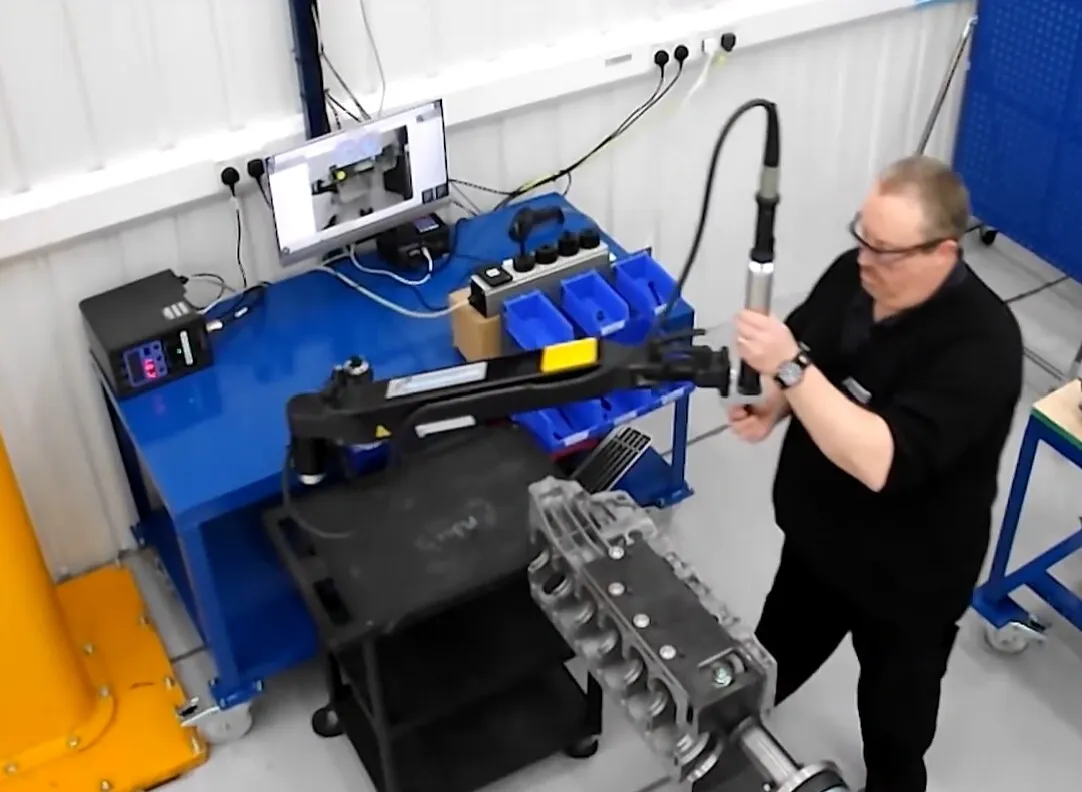
3arm offers different reaction-arm configurations for applications ranging from compact assembly stations to heavy-duty fastening. The correct system depends on the tool weight, torque, orientation and required working reach.
| 3arm | Max. tool weight | Max. horizontal reach | Torque capacity* | Best suited for |
| Series 0 | 35 kg / 77 lbs | 925 mm | Up to 650 Nm | Simple fastening applications |
| Series 2 | 10 kg / 22 lbs | 860 mm | Up to 120 Nm | Compact workstations |
| Series 3 | 35 kg / 77 lbs | 1,725 mm | Up to 650 Nm | General industrial fastening |
| Series 4 | 24 kg / 53 lbs | 1,555 mm | Up to 300 Nm | Extended vertical movement |
| Series 6 | 18 kg / 40 lbs | 2,095 mm | Up to 300 Nm | Long-reach applications |
| Series 7 | 60 kg / 132 lbs | 1,670 mm | Up to 1,200 Nm | Heavy-duty torque tools |
*Maximum torque depends on the selected head member and working orientation. For example, the catalogue specifies different vertical, horizontal and angled torque recommendations for several 3arm models.
For the most demanding applications, Series 7 supports tools up to 60 kg / 132 lbs and a specified torque capacity up to 1,200 Nm / 885 ft-lbs in its applicable vertical configuration.
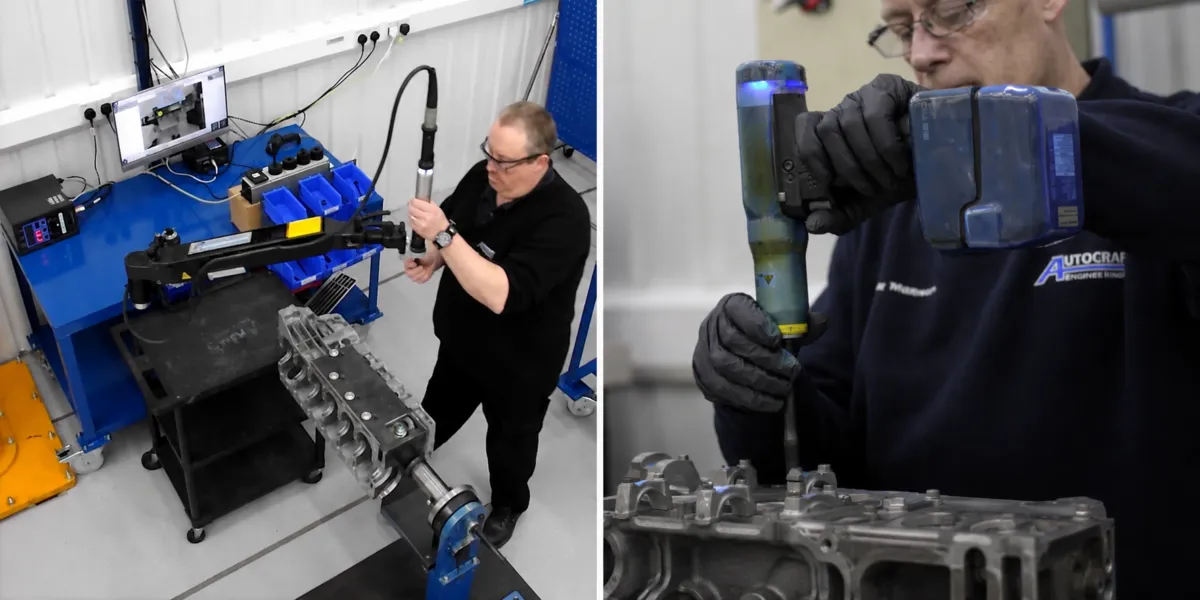
Both approaches can reduce the reaction experienced by an operator, but they solve the problem differently.
A pulse tool reduces the amount of continuous torque reaction transferred back through the tool during tightening. This can make it attractive for applications where mobility and unrestricted handheld operation are important.
A torque reaction arm mechanically absorbs the reaction from the fastening tool. It is often the better fit when the application requires higher torque, repetitive fastening or heavier tooling. A 3arm system also supports the weight of the tool, which means it addresses both torque reaction and tool handling ergonomics.
| Feature | Pulse tool | Direct-Drive tool + reaction arm |
| Reduces operator torque reaction | Yes – very low reaction force | Yes – reaction absorbed by arm |
| Supports tool weight | No | Yes |
| Completely handheld | Yes | No |
| Suitable for heavy tools | Limited by operator/tool weight | Yes |
| Defined workstation | Not required | Typically yes |
| High-torque applications | Yes | Yes |
| Ergonomic tool positioning | Operator controlled | Arm supported |
| When reaction support becomes relevant | Pulse technology often eliminates the need for a reaction arm | Direct drive: ~7 Nm pistol / ~40 Nm angle |
| Available torque range | 0.6–180 Nm depending on model | Depends on direct-drive tool/arm |
| Mobility | High | Limited by arm/workstation |
| Reaction device required | No for the pulse tools listed by Ansomat | Yes at higher reaction torque |
For applications involving an industrial nutrunner or reaction arm torque wrench setup, the best approach depends on required torque, fastening accuracy, tool weight, cycle frequency and workstation design.