-
Operator Guidance

Ansomat Management System
- Schroefsystemen
- Oplossingen
- Industrie
- Referenties
- Boek een demo
- Gratis test

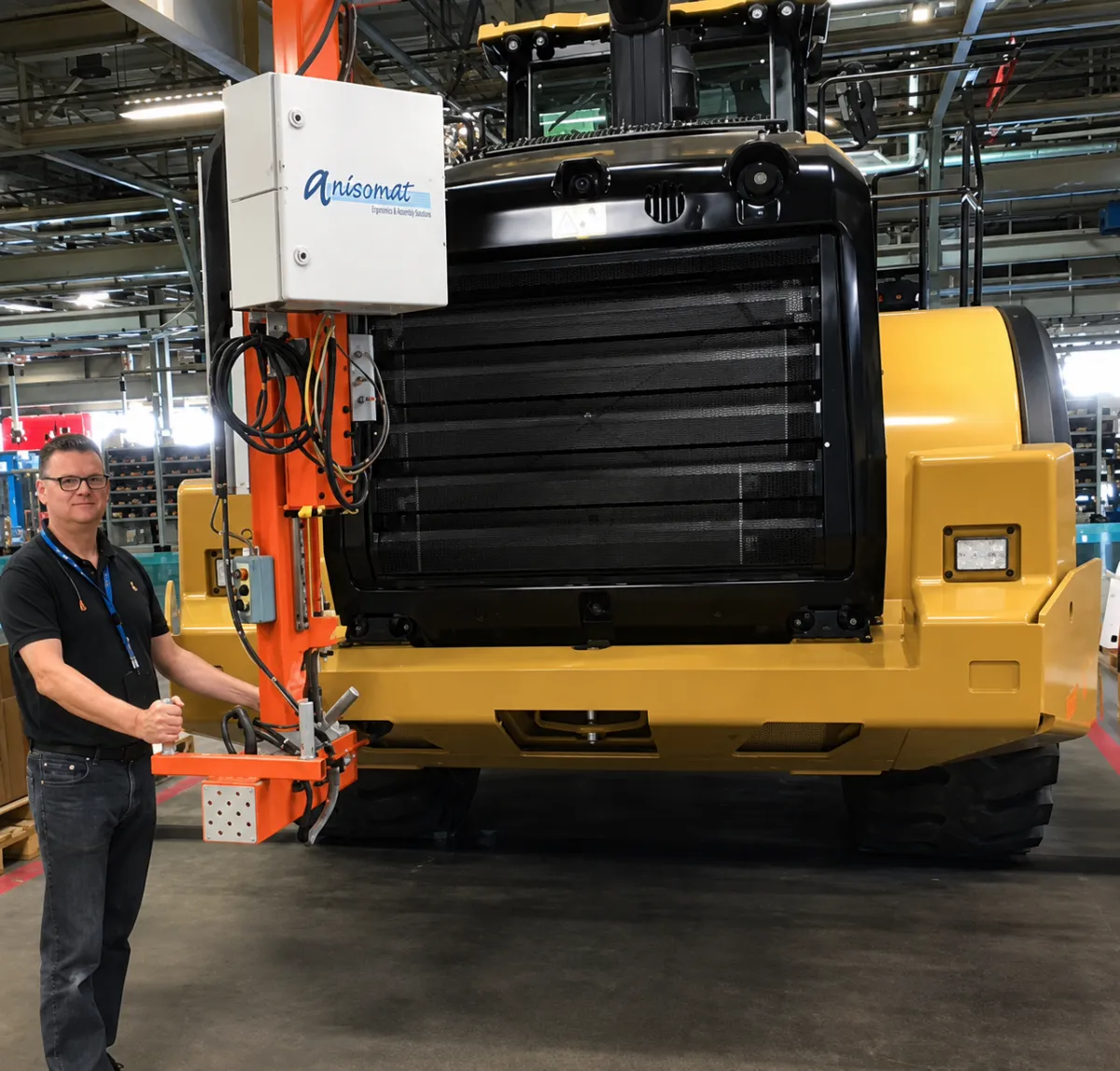
Ergonomie is de wetenschap die zich bezighoudt met het ontwerpen van werk, tools en werkomgevingen op basis van de mogelijkheden en beperkingen van mensen. Eenvoudig gezegd betekent ergonomie dat het werk wordt aangepast aan de operator, in plaats van dat de operator zich moet aanpassen aan het werk.
In een productieomgeving gaat ergonomie over veel meer dan alleen comfortabele werkhoudingen. Er wordt gekeken naar hoe operatoren tools optillen en hanteren, hoeveel kracht ze moeten uitoefenen, of onderdelen gemakkelijk bereikbaar zijn, hoe vaak bewegingen worden herhaald en zelfs hoe operatoren instructies en informatie ontvangen.
Goede ergonomie kan daarom bijdragen aan de veiligheid en het welzijn van de operators en tegelijkertijd de productiviteit, kwaliteit en consistentie op de productievloer ondersteunen.
De definitie van ergonomie op de werkvloer omvat de interactie tussen mensen en hun werkomgeving.
In de industriële productie kan ergonomie van invloed zijn op vrijwel elk onderdeel van de taak van een operator:
| Ergonomische overwegingen | Wat dit betekent voor de productie |
| Gewicht van het gereedschap | Hoeveel gewicht moeten de operatoren tillen, vasthouden en verplaatsen |
| Reactiekracht | De kracht die tijdens het vastzetten op de operator wordt overgebracht |
| Werkhouding | Of de operatoren moeten bukken, zich uitstrekken, draaien of reiken |
| Herhaling | Hoe vaak dezelfde beweging wordt uitgevoerd |
| Statische belasting | Hoe lang een operator een houding of kracht moet volhouden |
| Toegankelijkheid | Hoe gemakkelijk tools en operatoren het assemblagepunt kunnen bereiken |
| Operator guidance software | Hoe gemakkelijk de operator het proces kan begrijpen en volgen |
| Ontwerp van de werkplek | Hoe de volledige werkomgeving de operator ondersteunt |
Het doel is om werkomstandigheden te creëren waarin operatoren hun taken gedurende een hele dienst veilig, comfortabel en efficiënt kunnen uitvoeren .
Voor engineeringteams betekent dit dat ze bij het ontwerpen van het productieproces rekening moeten houden met ergonomie, in plaats van dit alleen als een corrigerende maatregel te beschouwen nadat er problemen zijn opgetreden.
Ergonomie wordt doorgaans bekeken vanuit fysiek, cognitief en organisatorisch perspectief. Alle drie kunnen een rol spelen in de industriële productie.
| Soort ergonomie | Primaire focus | Voorbeelden uit de productie van productiebedrijven |
| Fysieke ergonomie | Fysieke interactie tussen de operator en de taak | Gewicht van het gereedschap, houding, reactiemoment, trillingen, repetitieve bewegingen en statische belasting |
| Cognitieve ergonomie | Hoe operatoren informatie verwerken en met systemen omgaan | Werkinstructies, schermen, AR-begeleiding, waarschuwingen en procesfeedback |
| Organisatorische ergonomie | Hoe werk en processen worden georganiseerd | Proces, taakontwerp, communicatie en interactie tussen mensen en technologie |
In moderne productieomgevingen is het steeds vaker noodzakelijk om deze aspecten in hun onderlinge samenhang te beschouwen.
Een werkplek kan bijvoorbeeld fysiek ergonomisch zijn, maar toch vereisen dat een operator zich voortdurend naar een scherm moet draaien voor instructies. Omgekeerd kan uitstekende digitale begeleiding een zwaar gereedschap of een ongemakkelijke werkhouding niet compenseren.
Veiligheid is altijd al van fundamenteel belang geweest in de productiebedrijven. Wanneer zich een veiligheidsincident voordoet, is de zakelijke noodzaak voor corrigerende maatregelen doorgaans duidelijk.
Steeds vaker kijken productiebedrijven echter verder dan incidenten en directe veiligheidsrisico’s.
Het welzijn van de operator, RSI en arbeidsomstandigheden op de lange termijn worden op zichzelf al belangrijke technische overwegingen. Dit is met name relevant in productieomgevingen waar operatoren gedurende een hele dienst repetitieve, fysiek veeleisende taken uitvoeren.
Bovendien behoren banen in productiebedrijven niet altijd tot de meest aantrekkelijke. Het verbeteren van de arbeidsomstandigheden kan daarom deel uitmaken van een bredere inspanning om productieomgevingen te creëren waarin mensen veeleisend werk kunnen verrichten met minder onnodige fysieke en cognitieve belasting.
De verschuiving is in wezen van reactieve veiligheid naar proactieve ergonomie en welzijn:
| Traditionele aanpak | Proactieve ergonomische aanpak |
| Handelen nadat zich een veiligheidsprobleem heeft voorgedaan | Ergonomische risico’s identificeren tijdens de ontwerpfase |
| De nadruk ligt voornamelijk op onmiddellijke veiligheid | Rekening houden met veiligheid, belasting en welzijn op de lange termijn |
| Individuele apparatuur beoordelen | Beoordeel de operator, het gereedschap en de werkplek in hun onderlinge samenhang |
| Corrigeer problematische bewegingen | Ontwerp onnodige bewegingen uit het proces |
| De operator past zich aan het proces aan | Het proces wordt ontworpen rond de operator |
Goede ergonomie draait daarom steeds meer om het voorkomen van problemen in plaats van het achteraf corrigeren ervan.
Ergonomie kan op een productielijn vele vormen aannemen. De juiste oplossing hangt af van de oorzaak van het ergonomische probleem.
| Uitdaging | Ergonomische oplossing | Potentieel voordeel |
| Zwaar gereedschap | Lichtgewicht gereedschap, balancer of ergonomische arm | Minder gewicht voor de operator |
| Hoge reactiekracht | Tools met puls of lage reactie | Minder kracht die aan de operator wordt overgebracht |
| Resterende reactiekracht | Reactiestang of koppelarm | Mechanische opname van reactiekrachten |
| Herhalende beweging | Herontwerp van gereedschapssteun of werkplek | Verminderde fysieke belasting |
| Statische belasting | Balancer of ergonomische ondersteuning | Minder langdurige spierinspanning |
| Moeilijke toegankelijkheid | Op maat gemaakte mobiele of vaste constructie | Verbeterd bereik en werkhouding |
| Onhandige bevestigingspositie | Ergonomische arm of oplossing op maat | Betere positionering en bediening van gereedschap |
| Regelmatige controle van het scherm | AR of digitale operator guidance software | Minder afleiding |
| Complexe assemblagevolgorde | Slimme begeleiding en procesfeedback | Eenvoudigere procesuitvoering |
Het gaat er niet alleen om een ‘ergonomisch product’ te kiezen. Het gaat erom te begrijpen waar de ergonomische belasting vandaan komt en op basis daarvan de juiste oplossing te ontwikkelen.
Het gewicht van bevestigingstools is een van de meest voor de hand liggende ergonomische overwegingen.
Een operator die een tool af en toe hanteert, ervaart een heel andere fysieke belasting dan iemand die dezelfde handeling honderden keren per dienst uitvoert.
Zelfs relatief kleine verschillen in gewicht kunnen aanzienlijk worden wanneer bewegingen continue worden herhaald of wanneer het gereedschap in een ongemakkelijke houding moet worden vastgehouden.
Het verminderen van het gereedschapsgewicht is daarom een manier waarop slim gereedschap de fysieke ergonomie kan verbeteren. Wanneer het gereedschap zelf niet voldoende licht kan worden gemaakt, kunnen balancers, gereedschapssteunen en ergonomische armen dat gewicht geheel of gedeeltelijk van de operator wegnemen.
Gewicht is slechts één aspect van de ergonomie van tools.
Bevestigingsgereedschap kan ook reactiekrachten genereren wanneer er koppel wordt uitgeoefend. Als die krachten rechtstreeks op de operator worden overgebracht, kunnen herhaalde bevestigingshandelingen aanzienlijke fysieke belasting veroorzaken.
Pulsgereedschap en andere bevestigingstechnologieën met lage of geen reactiekrachten kunnen de reactiekracht die de operator ervaart verminderen.
Wanneer de reactiekracht niet voldoende binnen het gereedschap zelf kan worden verminderd, kunnen mechanische oplossingen dit overnemen. Reactiestangen, koppelarmen en andere ondersteunende constructies kunnen krachten absorberen of omleiden, zodat de operator dit niet hoeft te doen.
Een nuttige technische hiërarchie is:
| Prioriteit | Aanpak | Voorbeeld |
| 1. Verminderen | Verminder de fysieke belasting bij de bron | Kies een lichter tool |
| 2. Elimineren | Voorkom dat onnodige krachten op de operator worden overgebracht | Gebruik gereedschap met lage terugslag of pulsgereedschap |
| 3. Ondersteuning | Beheer de resterende belastingen mechanisch | Gebruik een reactiestang, balancer of ergonomische arm |
| 4. Optimaliseren | Verbeter de volledige interactie met de operators | Herontwerp de positionering, toegankelijkheid of proces |
Verminder het gewicht waar mogelijk. Elimineer reactiekrachten waar mogelijk. Ondersteun de resterende krachten waar nodig.
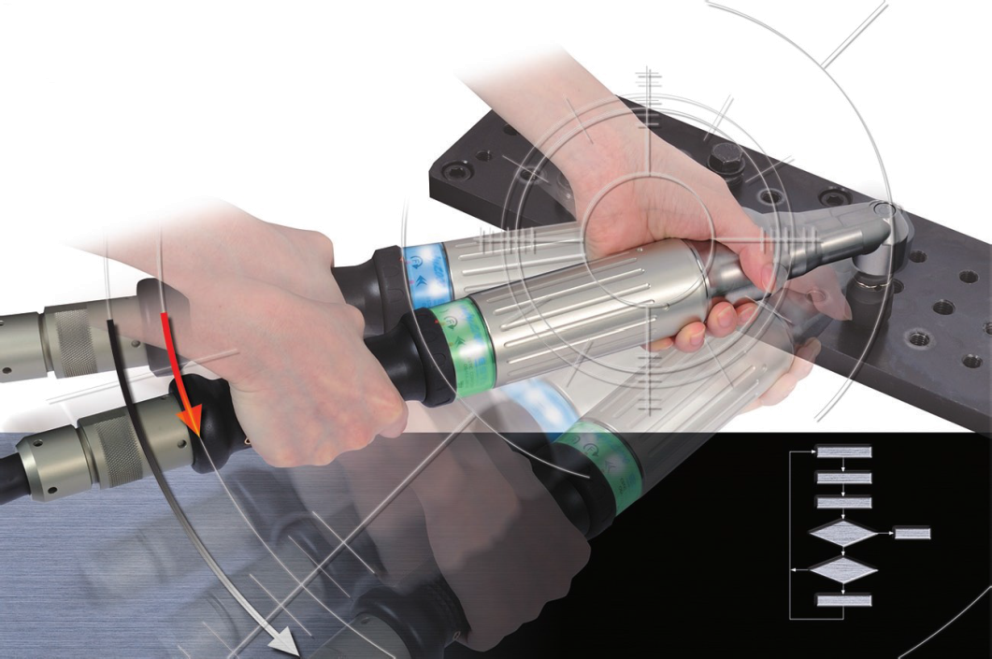
Ergonomische risico's komen niet altijd voort uit grote of plotselinge krachten.
Er is sprake vanstatische belasting wanneer spieren gedurende een langere periode een bepaalde houding of kracht moeten handhaven. Het vasthouden van een tool, het aannemen van een ongemakkelijke houding of het ondersteunen van een arm tijdens het reiken kan fysieke belasting veroorzaken, zelfs als er relatief weinig beweging plaatsvindt.
Combineer statische belasting met honderden herhalende handelingen en een ogenschijnlijk eenvoudige assemblagetaak kan fysiek veeleisend worden.
Voor een goede ergonomie moeten ingenieurs daarom verder kijken dan individuele bewegingen en rekening houden met frequentie, duur, houding, kracht en herstel gedurende de volledige werkcyclus.
Standaardtools alleen kunnen niet elke ergonomische uitdaging oplossen.
Zwaar gereedschap, een hoog koppel, lastige bevestigingshoeken en repetitieve handelingen kunnen speciale ondersteuningssystemen voor de operator vereisen.
Ansomat ontwikkelt ergonomische armen en ondersteunende constructies die operatoren de benodigde bewegingsvrijheid bieden en tegelijkertijd het gewicht van de tools en de reactiekrachten opvangen.
Afhankelijk van de toepassing kunnen gestandaardiseerde ergonomische oplossingen worden aangepast of kan een meer op maat gemaakte constructie worden ontworpen die is afgestemd op de productieopstelling.
Hierdoor kunnen operatoren zware tools of schroefsystemen met een hoog koppel met meer stabiliteit en controle hanteren, terwijl onnodige fysieke belasting wordt verminderd.
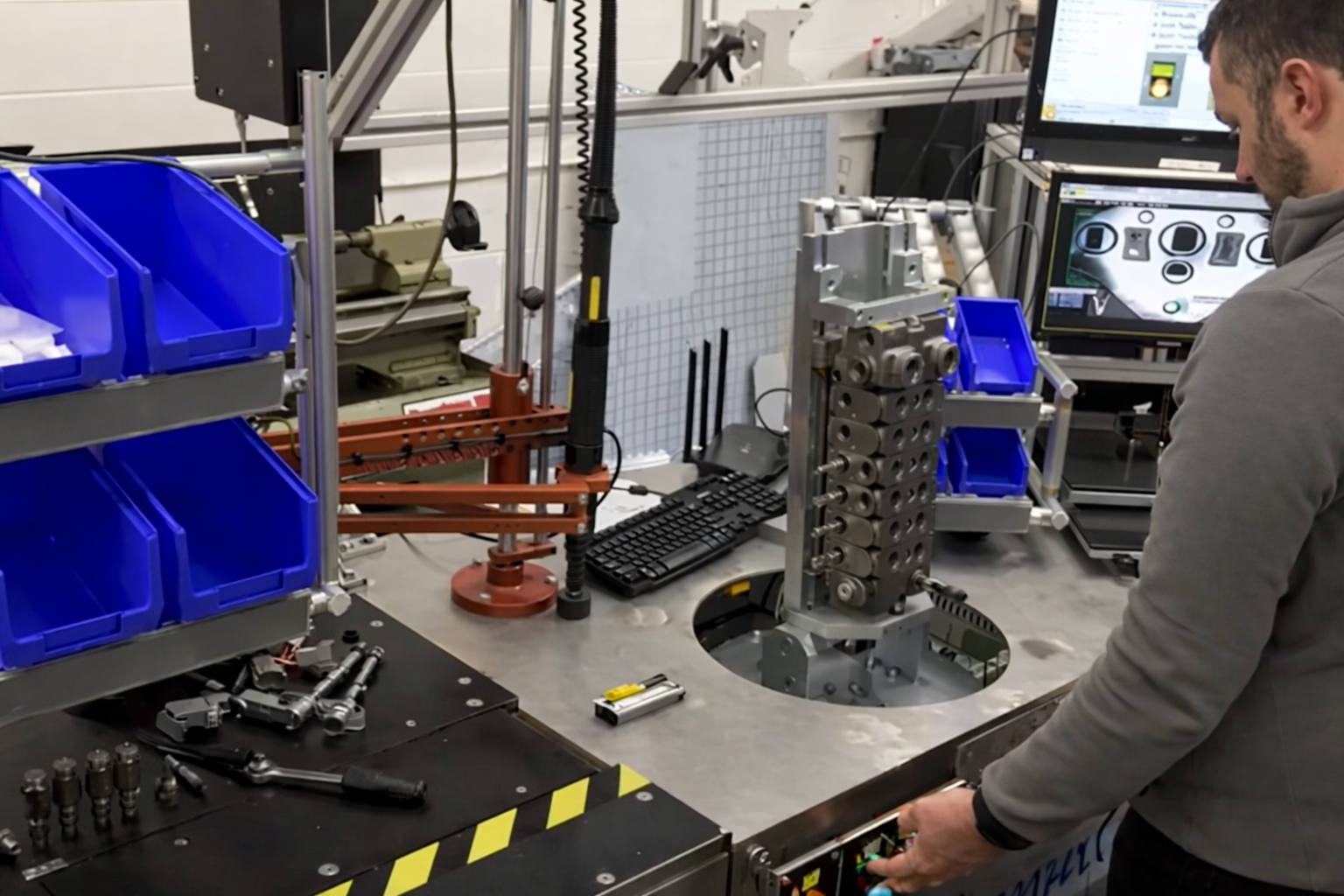
Het feit dat een bevestigingspunt technisch bereikbaar is, betekent niet automatisch dat het ook ergonomisch toegankelijk is.
Operatoren moeten mogelijk bukken, zich uitrekken, draaien of herhaaldelijk in ongemakkelijke hoeken werken om bepaalde componenten te bereiken. Andere bewerkingen kunnen beperkt zicht of “dode hoeken” veroorzaken, waardoor de montage moeilijker wordt.
Ansomat pakt deze uitdagingen op het gebied van toegankelijkheid aan met op maat gemaakte mobiele en vaste constructies die zijn ontworpen met zowel de operatoren als het productieproces in gedachten.
Het verschil is belangrijk:
| Basisbereikbaarheid | Ergonomische toegankelijkheid |
| Kan de operator erbij? | Kan de operator er comfortabel bij? |
| Past de tools fysiek in? | Kan het gereedschap op een natuurlijke manier worden gepositioneerd? |
| Kan de bevestigingshandeling worden voltooid? | Kan dit gedurende een hele dienst worden herhaald? |
| Is het onderdeel zichtbaar? | Is het zichtbaar zonder dat men een ongemakkelijke houding moet aannemen? |
| Werkt de oplossing technisch gezien? | Werkt het zowel voor het proces als voor de persoon? |
Dit onderscheid wordt vooral belangrijk wanneer een handeling honderden keren tijdens een productiedienst moet worden uitgevoerd.
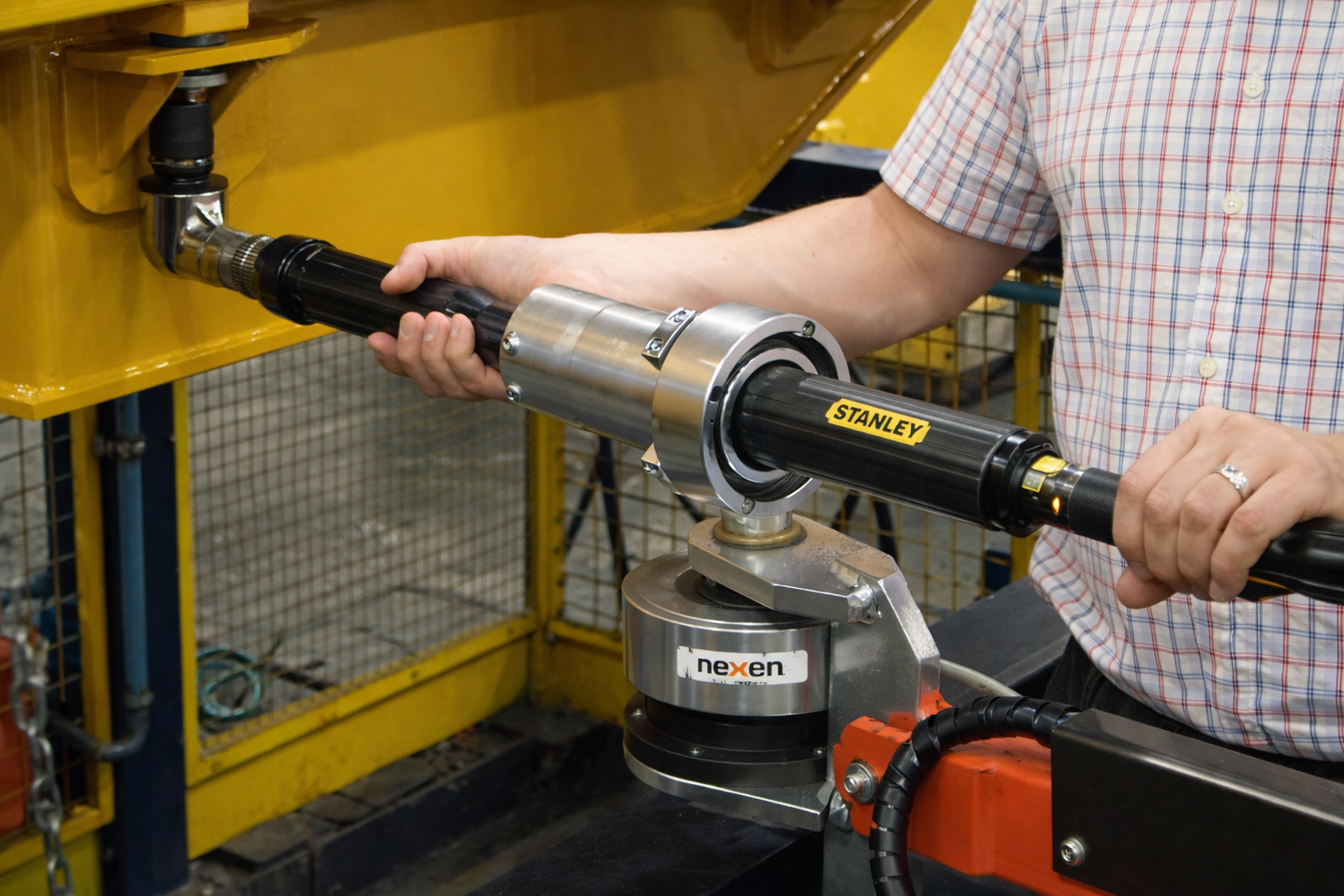
De ontwikkeling van slimme tools voegt een nieuwe dimensie toe aan de ergonomie.
Bij de gereedschapskeuze kan nu niet alleen rekening worden gehouden met koppel, nauwkeurigheid en cyclustijd, maar ook met gewicht, reactiekracht, interactie met de operator en procesfeedback.
Slimme tools voor het verschroeven kunnen er bovendien voor zorgen dat de juiste handeling met de juiste parameters wordt uitgevoerd. Dit vermindert de hoeveelheid informatie die de operator tijdens het werk handmatig moet verwerken.
Ergonomische tools combineerden daarom in toenemende mate fysieke ondersteuning met procesintelligentie.
Ergonomie is niet uitsluitend fysiek.
Operatoren kunnen ook cognitieve belasting ervaren wanneer ze complexe volgordes moeten onthouden, instructies moeten interpreteren, de juiste bevestigingsmiddelen moeten selecteren of hun aandacht herhaaldelijk moeten verleggen tussen het product en een pc-scherm.
Digitale werkinstructies en operator guidance software kunnen deze interactie vereenvoudigen.
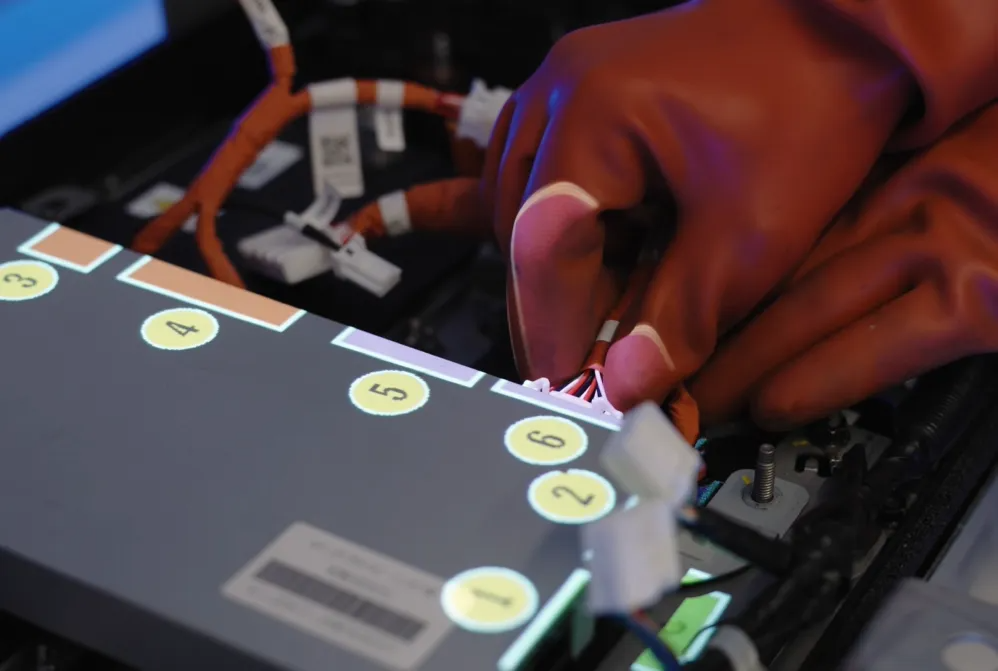
Met technologieën zoals augmented reality (AR) kunnen relevante instructies dichter bij de daadwerkelijke werkplek worden gebracht. In plaats van voortdurend zijn blik van de assemblage af te wenden om een apart scherm te bekijken, kan de operator zijn aandacht op het werk zelf gericht houden.
| Conventionele operator guidance software | AR / geïntegreerde begeleiding |
| De operator kijkt weg naar een apart scherm | De informatie wordt dichter bij de taak gebracht |
| Instructies staan los van het assemblageproces | Instructies kunnen direct betrekking hebben op het werkgebied |
| De operator bepaalt zelf waar de instructie van toepassing is | Begeleiding kan helpen bij het bepalen van de volgende handeling |
| Frequente verschuiving van de aandacht | Meer focus op de taak zelf |
| De operator volgt de volgorde handmatig | Digitale systemen kunnen de volgorde van de processtappen ondersteunen |
Begeleiding kan aangeven wat er moet gebeuren, waar de volgende handeling moet plaatsvinden en of een handeling correct is uitgevoerd.
Dit leidt tot een andere vorm van ergonomie: het werk wordt niet alleen begrijpelijker, maar ook fysiek gemakkelijker uit te voeren.
Er is zelden één product dat een heel productieproces ergonomisch maakt.
Een lichtgewicht tool vermindert het gewicht, maar lost niet noodzakelijkerwijs een toegankelijkheidsprobleem op. Een reactievrij tool vermindert de fysieke krachten, maar neemt een ongemakkelijke werkhouding niet weg. Een ergonomische arm kan het tool ondersteunen, maar kan niet voorkomen dat een operator herhaaldelijk zijn blik van de assemblage afwendt om instructies te volgen.
De beste oplossingen houden daarom rekening met het complete systeem:
| Operator | Gereedschap | Werkplek | Proces | Informatie |
| Houding | Gewicht | Toegankelijkheid | Herhaling | Instructies |
| Reikwijdte | Reactie | Positionering | Volgorde | Feedback |
| Fysieke belasting | Handling | Ondersteuning | Cyclus | AR-begeleiding |
| Cognitieve belasting | Controle | Zichtbaarheid | Proces | Kwaliteitscontrole |
Operator + gereedschap + werkplek + proces + informatie
Door het combineren van lichtgewicht tools met lage reactiekrachten, ergonomische ondersteuningssystemen, een toegankelijk werkstationontwerp en intelligente operator begeleidingssystemen, kunnen productiebedrijven werkomgevingen creëren die de operatoren beter ondersteunen.
Bij Ansomat maakt de ergonomie van de operator deel uit van het engineeringproces.
Of de uitdaging nu bestaat uit zwaar gereedschap, koppelreactie, statische belasting, repetitieve bewegingen, moeilijk bereikbare bevestigingspunten of complexe bedieningsinstructies: wij houden rekening met de interactie tussen mensen, gereedschap en processen.
Want de definitie van goede ergonomie is uiteindelijk eenvoudig:
De productieomgeving moet zich aanpassen aan de operator, en niet de operator dwingen zich eraan aan te passen.
Dat betekent dat we verder kijken dan één enkel tool of werkstation en de volledige interactie tussen de operator, de apparatuur en het proces ontwerpen.
Het resultaat is een productieomgeving die is ontworpen om te ondersteunen wat aan beide kanten van de vergelijking telt: de veiligheid en het welzijn van de operators, naast kwaliteit, consistentie en efficiëntie.
Elke productieomgeving brengt andere ergonomische uitdagingen met zich mee. Of u nu te maken hebt met zware tools, hoge reactiekrachten, repetitieve handelingen, moeilijk bereikbare bevestigingspunten of complexe instructies voor operatoren: de juiste oplossing begint met inzicht in de volledige toepassing.