-
Guidage des opérateurs

Ansomat Management System
- Outils de serrage
- Nos solutions
- Industries
- Références
- Réserver une démo
- Free trial

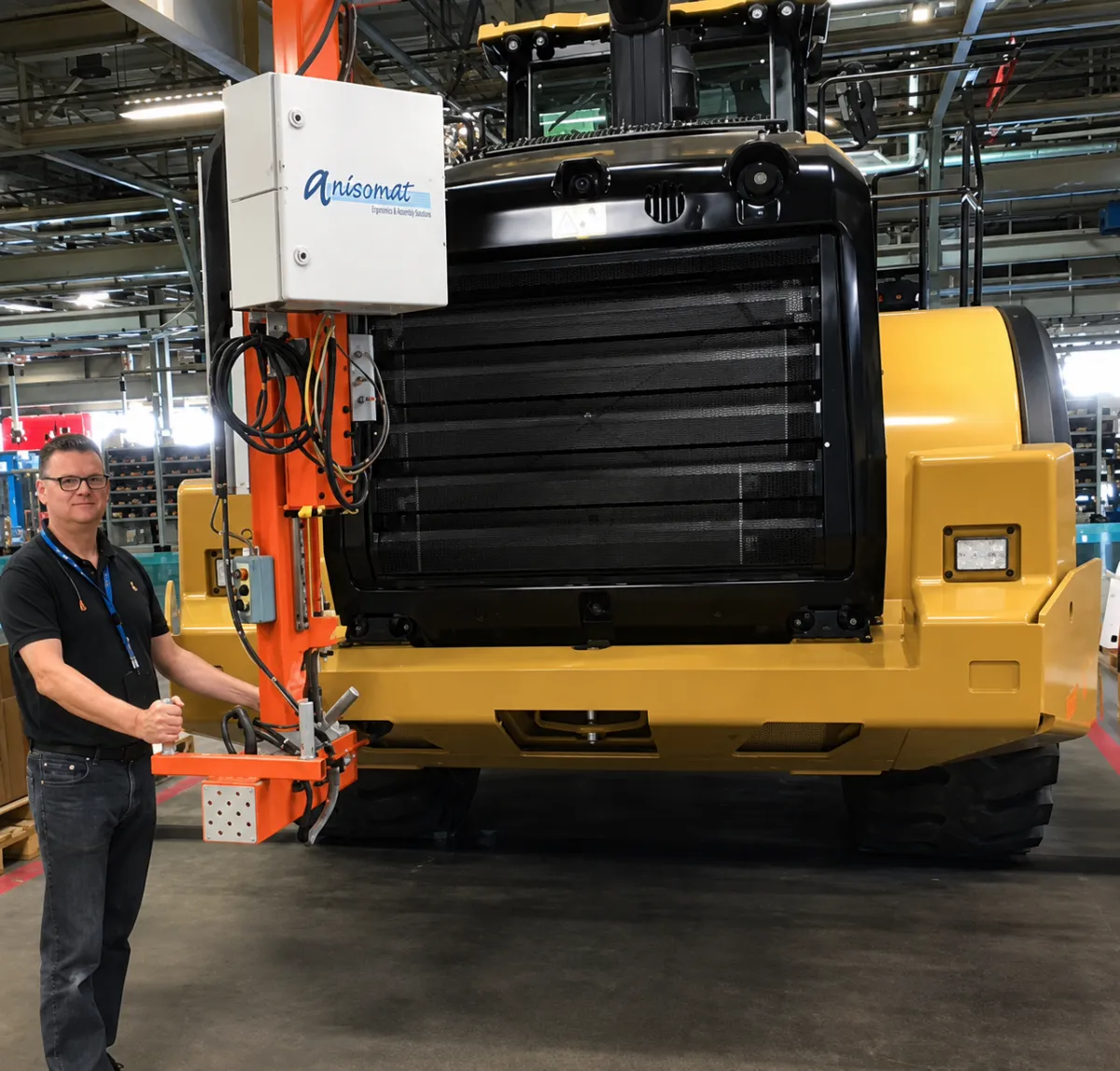
L’ergonomie est la science qui consiste à concevoir le travail, les outils et les environnements de travail en fonction des capacités et des limites des personnes. En termes simples, l’ergonomie consiste à adapter le travail à l’opérateur plutôt que de forcer ce dernier à s’adapter au travail.
Dans un environnement de production, l’ergonomie ne se limite pas à des positions de travail confortables. Elle prend en compte la manière dont les opérateurs soulèvent et manipulent les outils, la force qu’ils doivent exercer, l’accessibilité des composants, la fréquence des mouvements répétitifs et même la manière dont les opérateurs reçoivent les instructions et les informations.
Une bonne ergonomie peut donc contribuer à la sécurité et au bien-être des opérateurs, tout en favorisant la productivité, la qualité et la régularité sur le site de production.
La définition de l’ergonomie dans l’atelier englobe l’interaction entre les personnes et leur environnement de travail.
Dans la production industrielle, l’ergonomie peut avoir une incidence sur pratiquement tous les aspects de la tâche d’un opérateur :
| Aspects ergonomiques | Ce que cela signifie en production |
| Poids des outils | Poids que l’opérateur doit soulever, maintenir et déplacer |
| Force de réaction | Force transmise à l'opérateur lors du serrage |
| Position de travail | L'opérateur doit-il se pencher, s'étirer, se tordre ou tendre le bras ? |
| Répétition | Fréquence à laquelle le même mouvement est effectué |
| Charge statique | Durée pendant laquelle un opérateur doit maintenir une position ou exercer une force |
| Accessibilité | Facilité avec laquelle les outils et les opérateurs peuvent atteindre le point d'assemblage |
| Accompagnement de l'opérateur | Facilité avec laquelle l'opérateur peut comprendre et suivre le processus |
| Conception du poste de travail | Comment l'environnement de travail dans son ensemble facilite le travail de l'opérateur |
L'objectif est de créer des conditions de travail permettant aux opérateurs d'effectuer leurs tâches en toute sécurité, dans le confort et avec efficacité tout au long de leur service.
Pour les équipes d'ingénierie, cela implique de prendre en compte l'ergonomie dès la conception du processus de production, plutôt que de la considérer uniquement comme une mesure corrective une fois que des problèmes sont apparus.
L'ergonomie est généralement abordée sous les angles physique, cognitif et organisationnel. Ces trois aspects peuvent jouer un rôle dans la production industrielle.
| Type d’ergonomie | Axe principal | Exemples dans le secteur manufacturier |
| Ergonomie physique | Interaction physique entre l'opérateur et la tâche | Poids de l'outil, posture, réaction de couple, vibrations, mouvements répétitifs et charge statique |
| Ergonomie cognitive | Comment les opérateurs traitent les informations et interagissent avec les systèmes | Instructions de travail, écrans, guidage en réalité augmentée, alertes et retours d’information sur les processus |
| Ergonomie organisationnelle | Organisation du travail et des processus | Flux de travail, conception des tâches, communication et interaction entre les personnes et la technologie |
Les environnements de production modernes exigent de plus en plus que ces dimensions soient prises en compte de manière globale.
Un poste de travail, par exemple, peut être physiquement ergonomique tout en obligeant l’opérateur à se tourner constamment vers un écran pour recevoir des instructions. À l’inverse, un excellent guidage numérique ne peut pas compenser un outil lourd ou une position de travail inconfortable.
La sécurité a toujours été fondamentale dans le secteur manufacturier. Lorsqu'un incident de sécurité se produit, la nécessité de prendre des mesures correctives est généralement évidente.
De plus en plus, cependant, les fabricants regardent au-delà des incidents et des risques immédiats pour la sécurité.
Le bien-être des opérateurs, les microtraumatismes répétés et les conditions de travail à long terme deviennent des enjeux techniques importants à part entière. Cela est particulièrement pertinent dans les environnements de production où les opérateurs effectuent des tâches répétitives et physiquement exigeantes tout au long de leur service.
Les métiers de l’industrie ne sont pas toujours les plus attractifs non plus. L’amélioration des conditions de travail peut donc s’inscrire dans un effort plus large visant à créer des environnements de production dans lesquels les personnes peuvent effectuer un travail exigeant avec moins de contraintes physiques et cognitives inutiles.
Le changement consiste essentiellement à passer d’une sécurité réactive à une ergonomie et un bien-être proactifs:
| Approche traditionnelle | Approche ergonomique proactive |
| Agir après la survenue d’un problème de sécurité | Identifier les risques ergonomiques dès la phase de conception |
| Se concentrer principalement sur la sécurité immédiate | Prendre en compte la sécurité, la fatigue et le bien-être à long terme |
| Évaluer chaque équipement individuellement | Évaluer conjointement l’opérateur, l’outil et le poste de travail |
| Corriger les mouvements problématiques | Éliminer les mouvements superflus du processus |
| L'opérateur s'adapte au processus | Le processus est conçu autour de l'opérateur |
Une bonne ergonomie consiste donc de plus en plus à prévenir les problèmes plutôt qu’à les corriger a posteriori.
L'ergonomie peut prendre de nombreuses formes sur une chaîne de production. La solution appropriée dépend de l'origine du problème ergonomique.
| Problématique | Solution ergonomique | Avantage potentiel |
| Outil lourd | Outil léger, équilibreur ou bras ergonomique | Réduction de la charge portée par l’opérateur |
| Réaction de couple élevée | Outil à impulsion ou à faible réaction | Moins de force transmise à l'opérateur |
| Force de réaction résiduelle | Barre de réaction ou bras de couple | Absorption mécanique des forces de réaction |
| Mouvement répétitif | Refonte du support d'outil ou du poste de travail | Réduction de la charge de travail physique |
| Charge statique | Équilibreur ou support ergonomique | Effort musculaire moins soutenu |
| Accès difficile | Structure mobile ou fixe sur mesure | Amélioration de la portée et de la position de travail |
| Position de fixation inconfortable | Bras ergonomique ou solution sur mesure | Meilleur positionnement et meilleur contrôle de l'outil |
| Vérification fréquente de l'écran | Réalité augmentée ou guidage numérique de l'opérateur | Moins de changements d’attention |
| Séquence d’assemblage complexe | Guidage intelligent et retour d’information sur le processus | Exécution plus aisée du processus |
L'essentiel n'est pas simplement de choisir un « produit ergonomique ». Il s'agit de comprendre d'où provient la contrainte ergonomique et de concevoir la solution adaptée en fonction de celle-ci.
Le poids des outils de fixation est l’un des aspects ergonomiques les plus évidents à prendre en compte.
Un opérateur qui utilise un outil de manière occasionnelle subit une charge physique très différente de celle d’une personne qui effectue la même opération des centaines de fois au cours d’un poste de travail.
Même des différences de poids relativement faibles peuvent devenir significatives lorsque les mouvements sont répétés en continu ou lorsque l’outil doit être tenu dans une position inconfortable.
La réduction du poids de l'outil est donc l'un des moyens par lesquels un outillage intelligent peut améliorer l'ergonomie physique. Lorsque l'outil lui-même ne peut pas être suffisamment allégé, des équilibreurs, des supports d'outils et des bras ergonomiques peuvent transférer tout ou partie de ce poids loin de l'opérateur.
Le poids n’est qu’un aspect parmi d’autres de l’ergonomie des outils.
Les outils de vissage peuvent également générer des forces de réaction lorsque le couple est appliqué. Si ces forces sont transmises directement à l’opérateur, les opérations de vissage répétées peuvent entraîner une contrainte physique importante.
Les outils à impulsion et autres technologies de serrage à faible réaction ou sans réaction peuvent réduire l’intensité de la force de réaction subie par l’opérateur.
Lorsque la force de réaction ne peut pas être suffisamment réduite au niveau de l’outil lui-même, des solutions mécaniques permettent de la maîtriser. Les barres de réaction, les bras de couple et d’autres structures de soutien peuvent absorber ou rediriger les forces au lieu de laisser cette tâche à l’opérateur.
Voici une hiérarchie technique utile :
| Priorité | Approche | Exemple |
| 1. Réduire | Réduire la charge physique à la source | Choisir un outil plus léger |
| 2. Éliminer | Éviter de transmettre des forces inutiles à l'opérateur | Utiliser des outils à faible réaction ou à impulsion |
| 3. Soutenir | Gérer mécaniquement les charges restantes | Utiliser une barre de réaction, un équilibreur ou un bras ergonomique |
| 4. Optimisation | Améliorer l'interaction globale avec l'opérateur | Repenser le positionnement, l’accessibilité ou le flux de travail |
Réduire le poids dans la mesure du possible. Éliminer la réaction dans la mesure du possible. Prendre en charge les forces restantes si nécessaire.
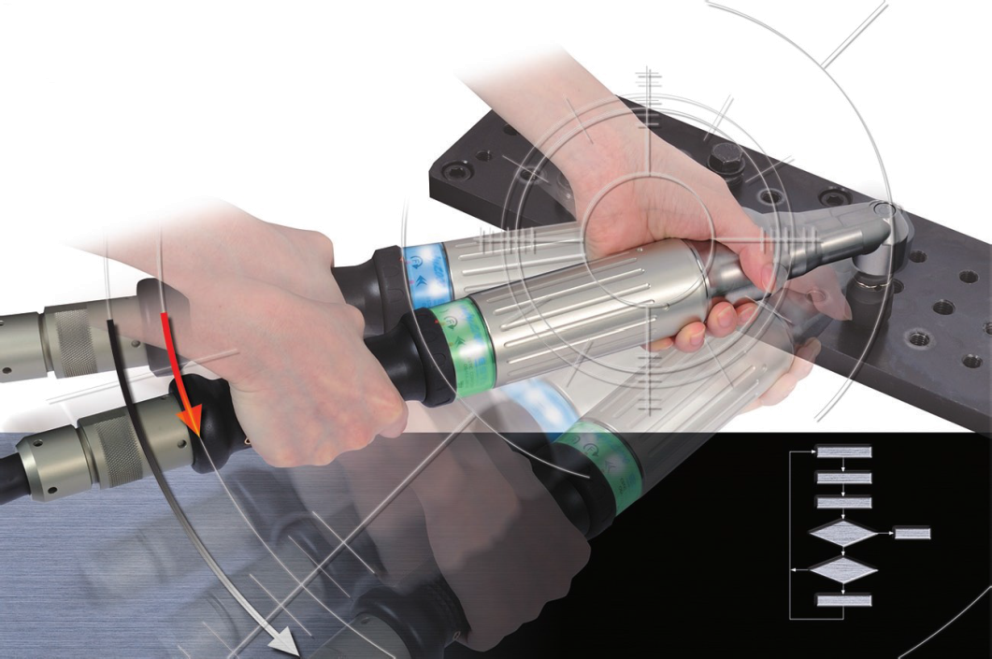
Les risques ergonomiques ne proviennent pas toujours de forces importantes ou soudaines.
Une charge statique survient lorsque les muscles doivent maintenir une position ou exercer une force pendant une période prolongée. Tenir un outil en place, adopter une posture inconfortable ou soutenir un bras tout en tendant le bras peut entraîner des contraintes physiques, même lorsque les mouvements sont relativement limités.
Si l’on ajoute à cette contrainte statique des centaines d’opérations répétitives, une tâche d’assemblage en apparence simple peut devenir physiquement exigeante.
Une bonne ergonomie exige donc des ingénieurs qu’ils ne se limitent pas aux mouvements individuels, mais qu’ils prennent en compte la fréquence, la durée, la posture, la force et la récupération tout au long du cycle de travail complet.
Les outils standard ne suffisent pas à eux seuls à résoudre tous les défis ergonomiques.
Équipements lourds, couples élevés, angles de serrage difficiles et opérations répétitives peuvent nécessiter des systèmes de soutien dédiés à l’opérateur.
Ansomat développe des bras ergonomiques et des structures de support qui offrent aux opérateurs l’amplitude de mouvement nécessaire tout en supportant le poids de l’outil et les forces de réaction.
En fonction de l’application, des solutions ergonomiques standardisées peuvent être adaptées ou une structure sur mesure peut être conçue en fonction de la configuration de production.
Cela permet aux opérateurs de manipuler des outils lourds ou à couple élevé avec une plus grande stabilité et un meilleur contrôle, tout en réduisant les efforts physiques inutiles.
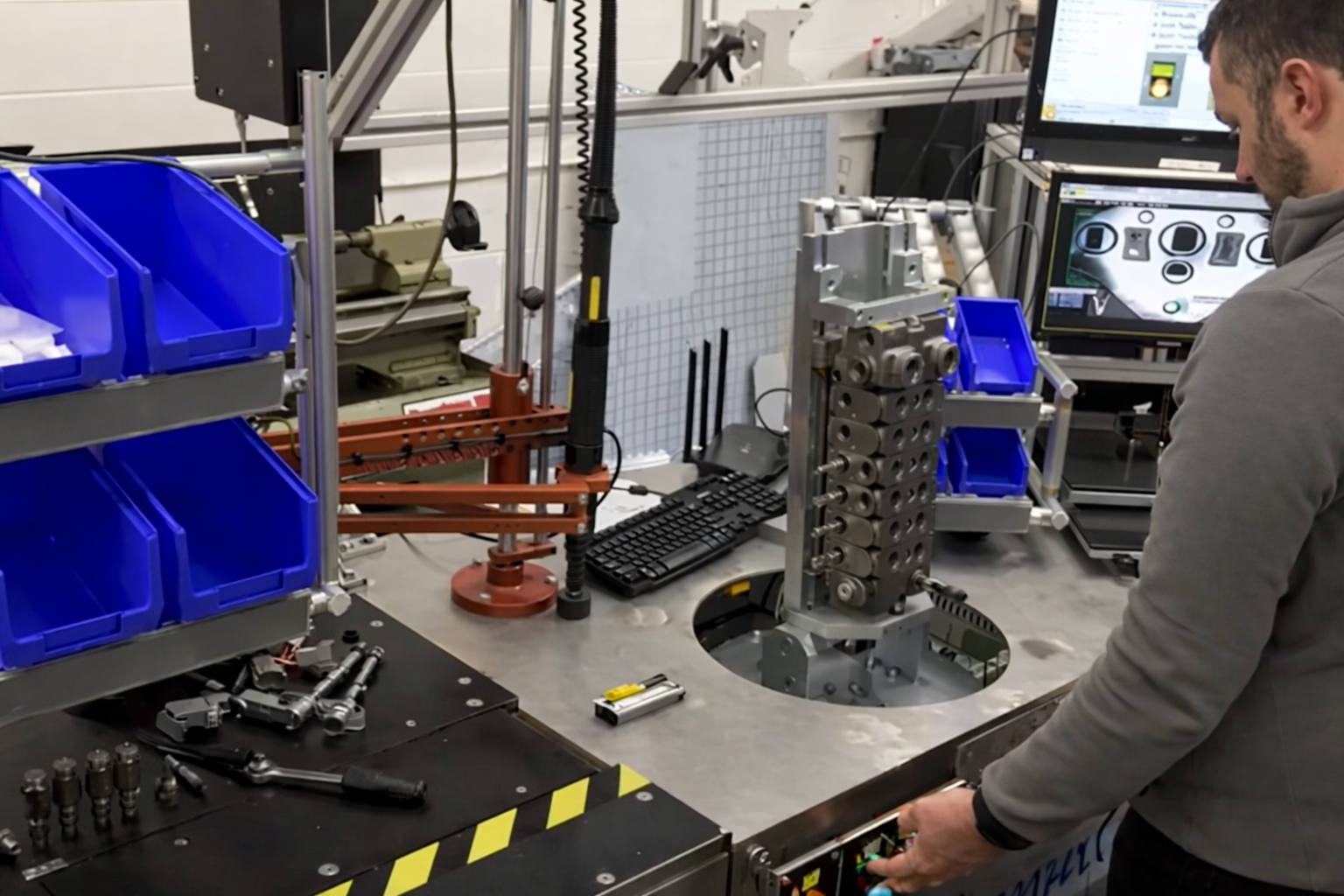
Le fait qu’un point de fixation soit techniquement accessible ne signifie pas automatiquement qu’il l’est d’un point de vue ergonomique.
Les opérateurs peuvent être amenés à se pencher, à s’étirer, à se tordre ou à travailler de manière répétée dans des positions inconfortables pour atteindre certains composants. D’autres opérations peuvent entraîner une visibilité réduite ou créer des « angles morts » qui compliquent l’assemblage.
Ansomat répond à ces défis d’accessibilité grâce à des structures mobiles et fixes sur mesure, conçues en tenant compte à la fois de l’opérateur et du processus de production.
La différence est importante :
| Accessibilité de base | Accessibilité ergonomique |
| L’opérateur peut-il l’atteindre ? | L'opérateur peut-il l'atteindre confortablement ? |
| L'outil peut-il s'adapter physiquement ? | L'outil peut-il être positionné naturellement ? |
| L'opération de fixation peut-elle être menée à bien ? | Cette opération peut-elle être répétée tout au long d'un poste de travail ? |
| Le composant est-il visible ? | Peut-on le voir sans adopter une posture inconfortable ? |
| La solution est-elle techniquement viable ? | Convient-elle à la fois au processus et à la personne? |
Cette distinction revêt une importance particulière lorsqu'une opération doit être effectuée des centaines de fois au cours d'un poste de production.
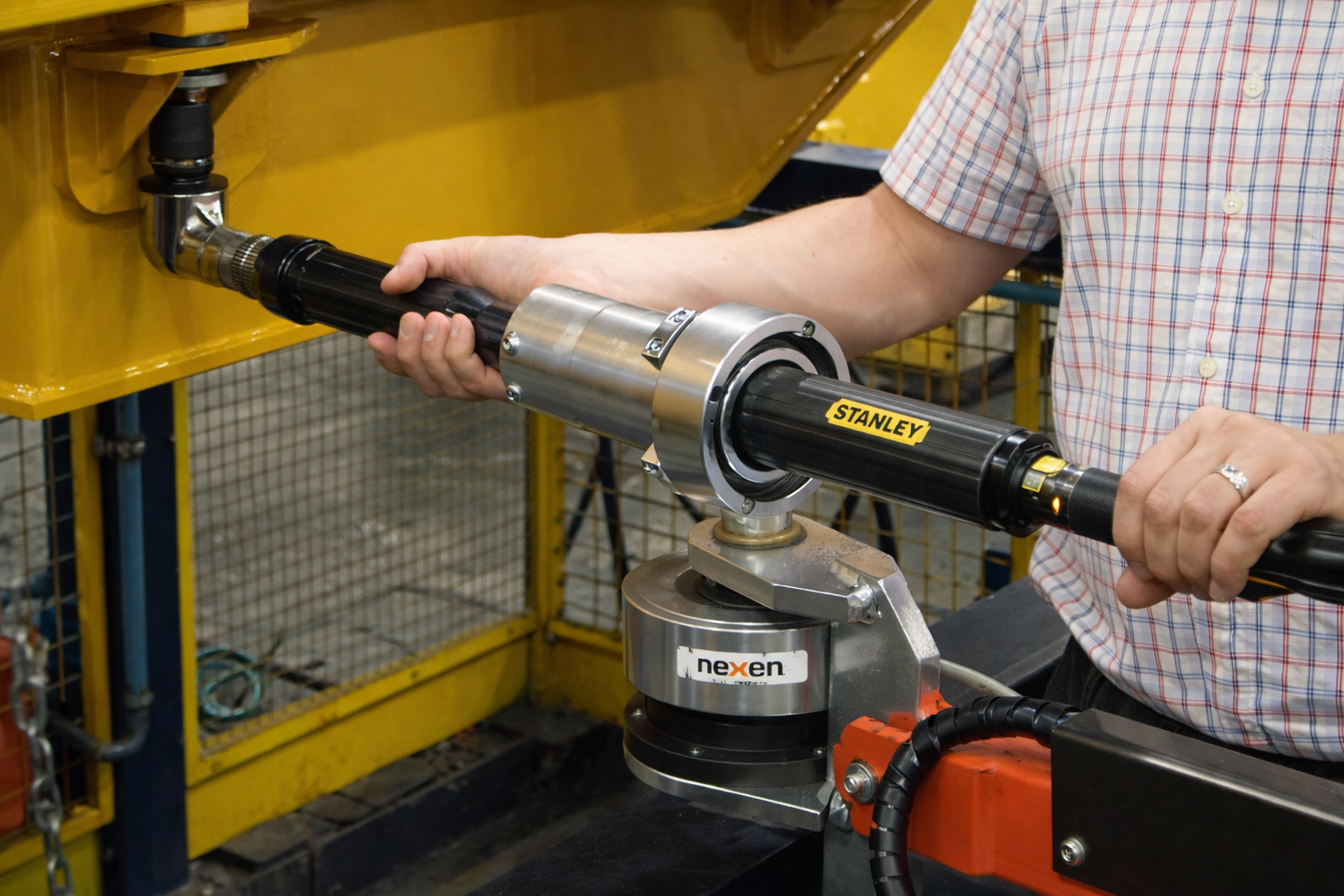
Le développement d’outils intelligents ajoute une nouvelle dimension à l’ergonomie.
Le choix de l’outil peut désormais prendre en compte non seulement le couple, la précision et la durée du cycle, mais aussi le poids, la force de réaction, l’interaction avec l’opérateur et le retour d’information sur le processus.
Les outils de serrage intelligents permettent en outre de garantir que l’opération est effectuée correctement avec les bons paramètres. Cela réduit la quantité d’informations que l’opérateur doit gérer manuellement pendant son travail.
L'outillage ergonomique allie donc de plus en plus le soutien physique à l'intelligence des processus.
L’ergonomie n’est pas exclusivement physique.
Les opérateurs peuvent également subir une charge cognitive lorsqu’ils doivent mémoriser des séquences complexes, interpréter des instructions, sélectionner la fixation appropriée ou basculer sans cesse leur attention entre le produit et l’écran d’un PC.
Les instructions de travail numériques et le guidage de l’opérateur peuvent simplifier cette interaction.
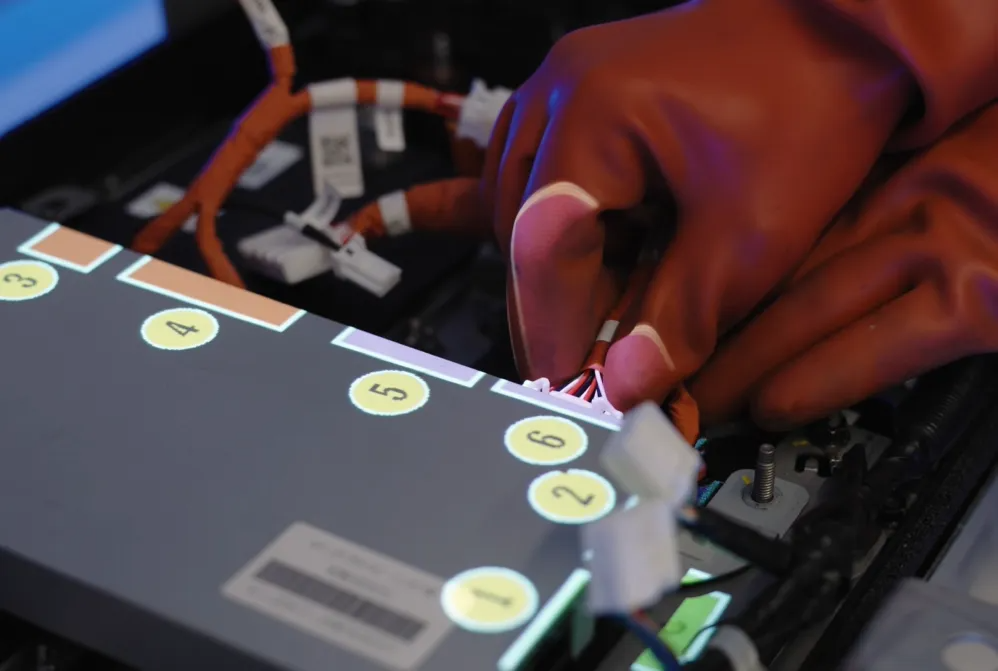
Grâce à des technologies telles que la réalité augmentée (RA), les instructions pertinentes peuvent être affichées à proximité immédiate de la zone de travail. Au lieu de détourner continuellement son regard de l’assemblage pour consulter un écran séparé, l’opérateur peut rester concentré sur le travail lui-même.
| Guidage classique de l’opérateur | RA / guidage intégré |
| L’opérateur détourne le regard vers un écran séparé | Les informations sont rapprochées de la tâche |
| Les instructions sont séparées de l'assemblage | Les instructions peuvent se rapporter directement à la zone de travail |
| L'opérateur détermine où l'instruction s'applique | Les conseils peuvent aider à identifier l’opération suivante |
| Changements fréquents d’attention | Concentration accrue sur la tâche elle-même |
| L'opérateur suit manuellement la séquence | Les systèmes numériques peuvent faciliter l’enchaînement des étapes |
Les instructions peuvent indiquer ce qui doit être fait, où l'opération suivante doit avoir lieu et si une opération a été correctement effectuée.
Cela crée une autre forme d’ergonomie : rendre le travail plus facile à comprendre ainsi que plus facile à exécuter physiquement.
Il est rare qu’un seul produit rende l’ensemble d’un processus de production ergonomique.
Un outil léger réduit la charge, mais ne résout pas nécessairement un problème d’accessibilité. Un outil sans réaction réduit les efforts physiques, mais n’élimine pas une position de travail inconfortable. Un bras ergonomique peut soutenir l’outil, mais ne peut empêcher un opérateur de détourner régulièrement son regard de l’assemblage pour consulter les instructions.
Les solutions les plus efficaces prennent donc en compte l’ensemble du système :
| Opérateur | Outil | Poste de travail | Processus | Informations |
| Posture | Poids | Accessibilité | Répétition | Instructions |
| Portée | Réaction | Positionnement | Séquence | Retour d'information |
| Effort physique | Manipulation | Soutien | Cycle | Guidage en réalité augmentée |
| Charge cognitive | Contrôle | Visibilité | Flux de travail | Validation de la qualité |
Opérateur + Outil + Poste de travail + Processus + Information
En combinant des outillages légers et à faible inertie, des systèmes d’assistance ergonomiques, une conception de postes de travail accessibles et un guidage intelligent des opérateurs, les fabricants peuvent créer des environnements de travail qui accompagnent mieux les personnes qui les utilisent.
Chez Ansomat, l’ergonomie de l’opérateur fait partie intégrante du processus d’ingénierie.
Que le défi porte sur des outils lourds, la réaction de couple, les charges statiques, les mouvements répétitifs, les points de fixation inaccessibles ou des consignes d’utilisation complexes, nous prenons en compte l’interaction entre les personnes, les outils et les processus.
Car la définition d’une bonne ergonomie est, en fin de compte, simple :
C’est l’environnement de production qui doit s’adapter à l’opérateur, et non l’inverse.
Cela implique de ne pas se limiter à un seul outil ou poste de travail, mais de concevoir l’interaction globale entre l’opérateur, l’équipement et le processus.
Il en résulte un environnement de production conçu pour favoriser ce qui compte des deux côtés de l’équation : la sécurité et le bien-être de l’opérateur, ainsi que la qualité, la cohérence et l’efficacité.
Chaque environnement de production présente des défis ergonomiques différents. Que vous ayez affaire à des outils lourds, à des forces de réaction élevées, à des opérations répétitives, à des points de fixation difficiles d’accès ou à des consignes d’utilisation complexes, la bonne solution commence par une compréhension globale de l’application.