-
Guidage des opérateurs

Ansomat Management System
- Outils de serrage
- Nos solutions
- Industries
- Références
- Réserver une démo
- Free trial


Les manuels d'instruction sur papier n'étaient plus suffisants pour soutenir les flux de travail complexes des opérations d'assemblage chez Thorn Lighting. L'entreprise a donc fait appel à Ansomat Operator Guidance System pour numériser ses instructions de travail. Aujourd'hui, Zumtobel peut dire avec fierté que pratiquement n'importe quel opérateur peut effectuer n'importe quel travail, sans compromettre la qualité du produit ou la vitesse de production.
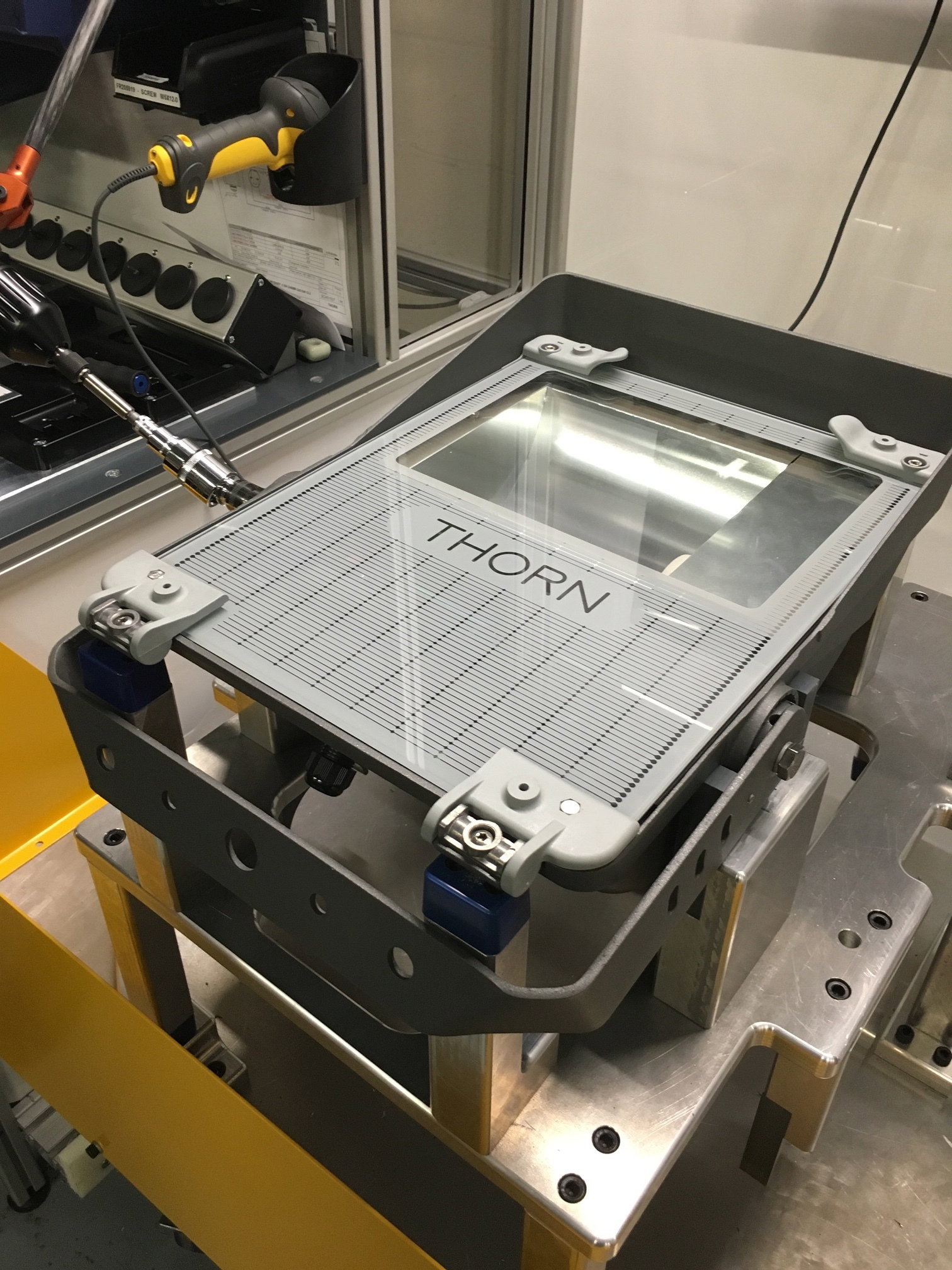
Outdoor lighting products require numerous assembly operations, component variants, and quality checks. For many years, operators relied on printed workbooks and spreadsheets to complete these manufacturing processes.
Although these documents contained the required information, they often proved difficult to follow during production. Operators needed to interpret lengthy instructions while simultaneously assembling products, increasing the likelihood of mistakes.
The transition to LED technology further increased manufacturing complexity.
Unlike traditional light sources, LED modules are typically integrated into the luminaire. If an LED is assembled incorrectly, the component often cannot simply be replaced. In many cases, the complete luminaire must be rebuilt, resulting in higher manufacturing costs, additional labor, production delays, and increased recall risks.
Thorn required a digital solution capable of guiding operators through every assembly step while reducing variation and ensuring product quality.
To modernize its manufacturing operations, Thorn implemented the Ansomat Operator Guidance System throughout its production facility in Spennymoor, United Kingdom.
The platform replaced static paper documentation with dynamic work instructions that actively support operators throughout the complete assembly process.
More than 110 workstations now benefit from intelligent operator guidance technologies that standardize production while remaining flexible enough to support changing workflows.
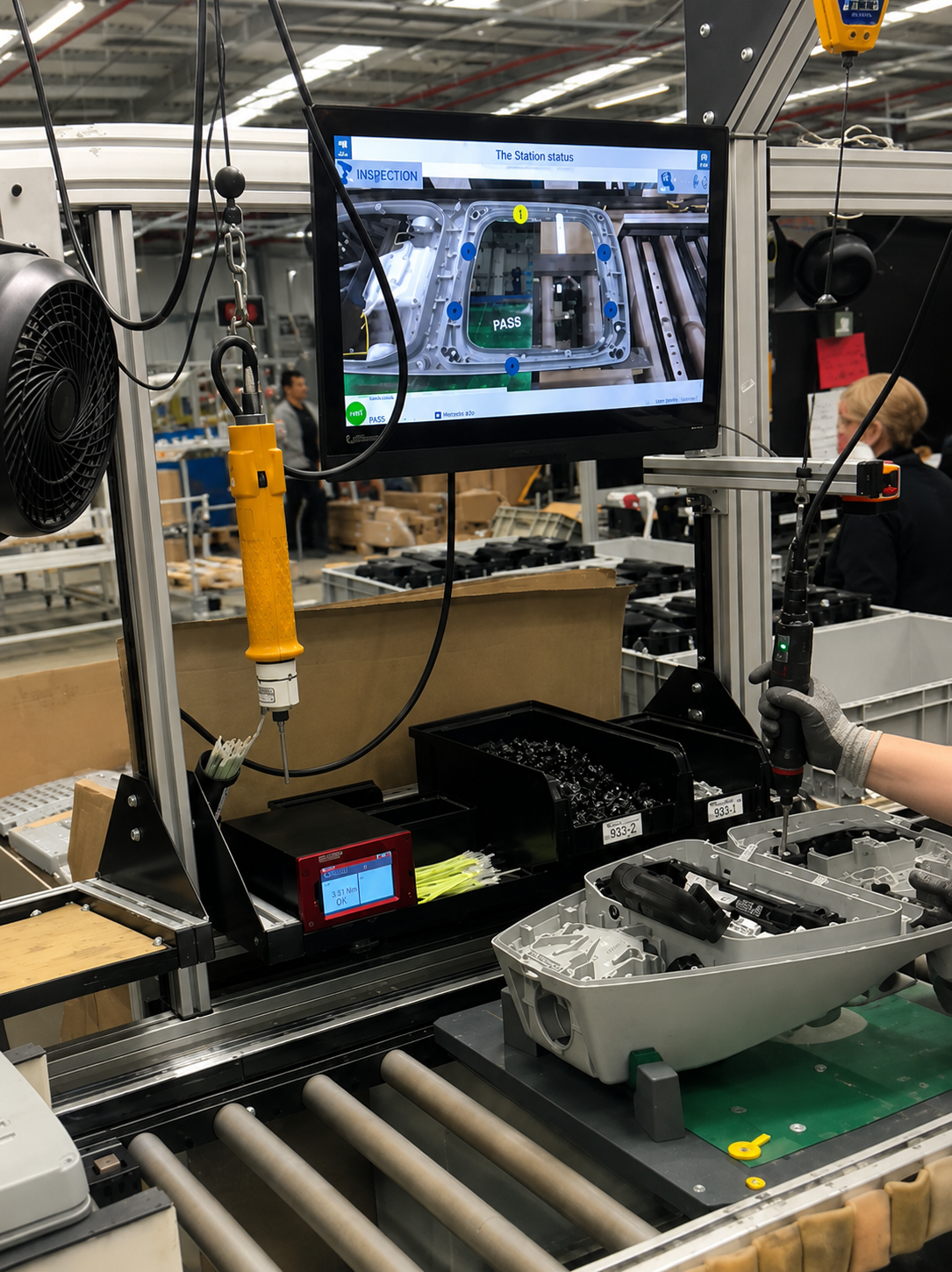
Operators receive clear, step-by-step guidance directly on-screen throughout each manufacturing process. Instructions are always linked to the correct product variant, reducing confusion and eliminating outdated documentation.
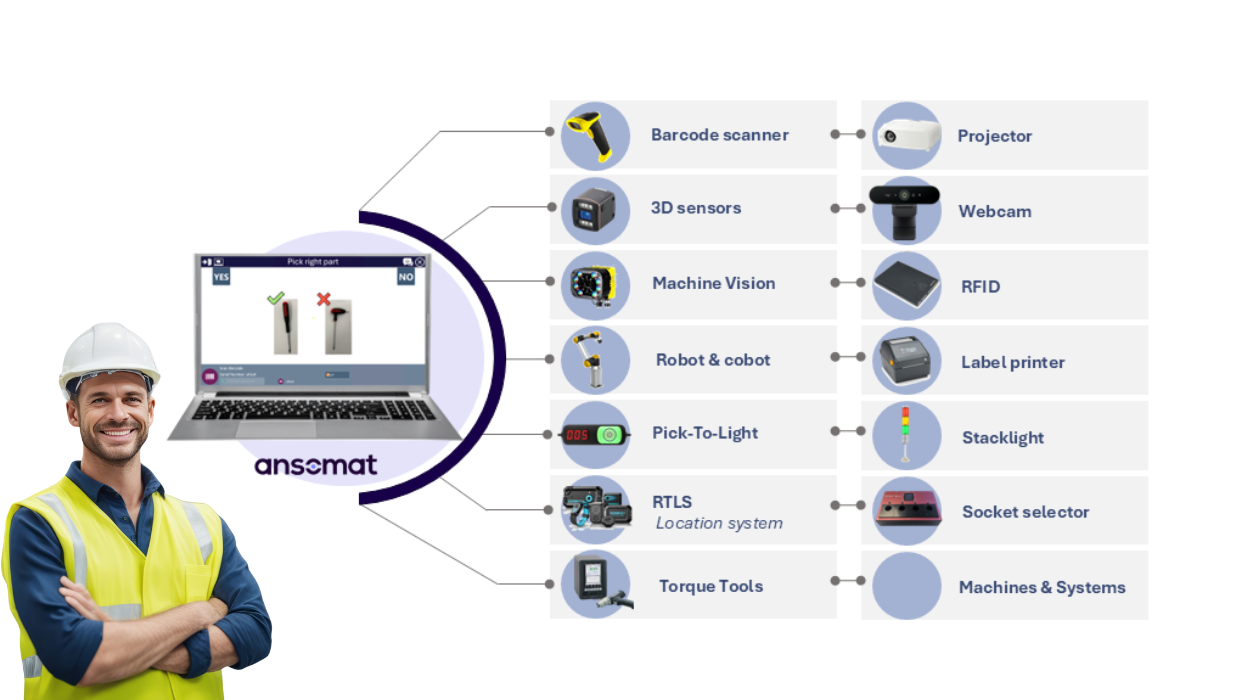
Vision technology verifies product positioning and supports accurate component selection. This additional validation layer helps detect potential assembly errors before they progress further through production.
Visual overlays projected onto the workstation provide intuitive guidance for complex assembly tasks such as wiring and component placement. Operators can immediately see where each part belongs, reducing interpretation errors.
Barcode scanning confirms that the correct materials, components, and LED modules are selected before assembly continues. The system automatically loads the appropriate work instructions for each configuration.
Integrated weight checks compare partially assembled products against SAP reference values to ensure every required component has been installed before production moves forward.
Direct communication between the operator guidance platform and manufacturing equipment enables seamless data exchange while improving process reliability and traceability.
The system adjusts instruction detail according to operator experience. New employees receive comprehensive guidance, while experienced operators can work with streamlined instructions that maximize efficiency without sacrificing quality.
Connected tightening tools communicate directly with the operator guidance system to ensure the correct torque and angle strategy is applied for every fastening operation. Tightening results are automatically verified and recorded, providing full traceability while preventing assembly errors.
The operator guidance platform integrates with collaborative robots (cobots) to coordinate manual and automated assembly tasks. Operators receive clear instructions before and after automated operations, ensuring a smooth, efficient workflow with consistent product quality.


Replacing printed documentation with digital instructions significantly improved operator performance.
Instead of relying solely on text-based manuals, employees now receive information through videos, animations, images, audio prompts, and interactive visual guidance.
Voice-assisted instructions allow operators to keep their attention focused on the assembly task rather than constantly switching between products and documentation.
The system also automatically alerts operators whenever additional visual confirmation is required, ensuring that critical manufacturing steps are completed correctly.
According to Gary Pilkington, Manufacturing Engineer at Thorn, digital operator guidance has made it far easier to deliver the right information at the right moment, allowing production teams to consistently manufacture high-quality lighting products while reducing assembly mistakes.
Steve Maughan, Manufacturing Engineer at Thorn, also highlighted the immediate business impact. Following the launch of a new product line using the digital guidance system, the company reported zero customer complaints, compared with numerous issues experienced during previous product introductions.
One of the biggest operational improvements was the reduction in operator training time. Because every assembly process is digitally standardized, employees can quickly become productive across multiple workstations.
Instruction detail automatically adapts to the operator's experience level, allowing new employees to receive detailed guidance while experienced operators work more efficiently with simplified instructions.
Unlike paper manuals, digital work instructions can be updated instantly whenever production processes change. This enables production engineers to rebalance lines, relocate workstations and continuously improve workflows without reprinting documentation.
Operators quickly embraced the new system because instructions became easier to understand and follow. Rather than creating a blame culture, digital guidance helps identify whether issues originate from product design or process improvements instead of individual operators.
Like many digital transformation projects, demonstrating ROI was essential for securing management support. Initial concerns that digital work instructions would slow production were quickly disproven through measurable production data.
Whether you're assembling lighting products, electronics, industrial equipment, or other complex products, digital operator guidance can help standardize processes, reduce defects, and improve production flexibility.
Discover how Ansomat can help your team achieve first-time-right manufacturing through digital work instructions, connected tools, vision inspection, and real-time process guidance.